
How to Create a Traditional Style Bathroom Without Making It Look Old-Fashioned?
A traditional style bathroom does not have to look dated. Combine elegant shapes, quality materials and timeless colours with modern comfort.Think of a roll-top bath with a contemporary shower, a classic basin with smart storage, or traditional taps against simple tiles. This creates classic bathroom design that feels warm without becoming cluttered.
What Makes a Traditional Bathroom Feel Modern?
Avoid making every element traditional. Use contrast to keep the room current.
| Traditional feature | Modern way to use it |
|---|---|
| Roll-top bath | Pair it with a simple glass shower screen |
| Pedestal basin | Add contemporary lighting and a large mirror |
| Crosshead taps | Choose a restrained finish |
| Metro tiles | Use a modern colour or clean grout lines |
| Classic vanity | Add soft-close storage |
| Traditional radiator | Use modern thermostatic control |
One or two heritage features can give the room personality. Repeating decorative details throughout can make it feel themed.
Start With One Hero Feature
Choose one main feature, such as a freestanding bath, shaped basin, traditional vanity or distinctive brassware. Keep surrounding finishes quieter, especially in smaller bathrooms, where too many details can feel overwhelming.
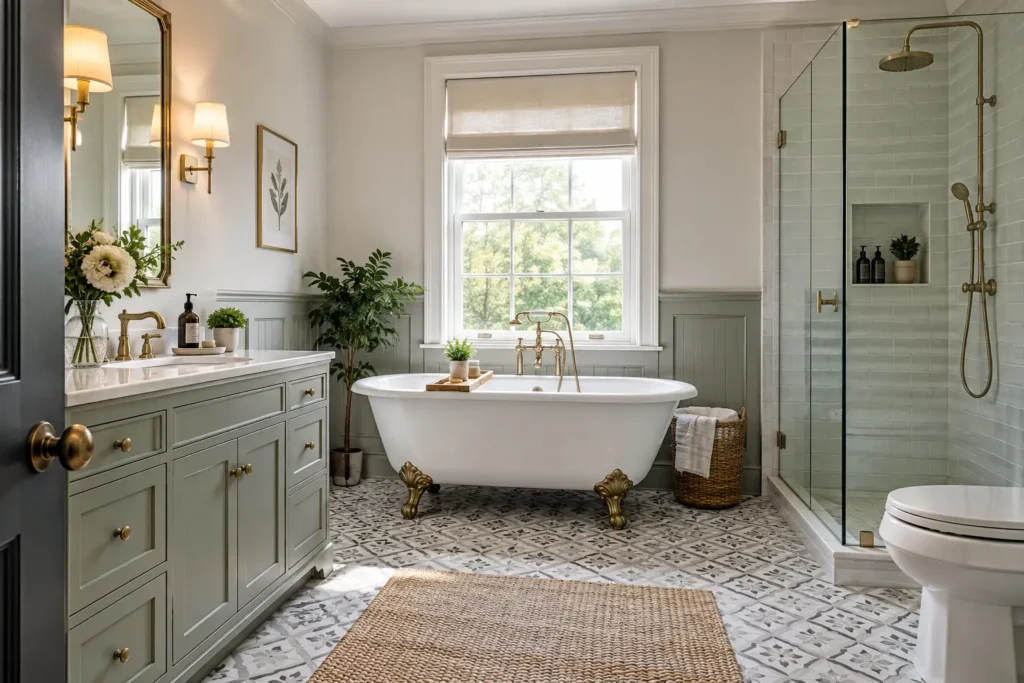
Use Colour to Refresh Classic Bathroom Design
Colour strongly affects whether classic bathroom design feels fresh or dated.
White is reliable, but soft sage green, muted blue, warm cream, stone, dusty pink and heritage-inspired shades can add character. Choose one main colour, one neutral background and one metal finish. For example, a soft green vanity, warm white walls and aged brass fittings can look sophisticated without excessive decoration.
Black and white can also work well, particularly with checkerboard floors or monochrome tiles.
Mix Traditional Fixtures With Modern Comfort
Traditional style should not mean sacrificing functionality. Modern toilets, efficient flushing, ceramic tap cartridges and thermostatic showers can all be combined with heritage-inspired fittings.
Consider how the room will work every day. Is there enough storage? Can two people use the basin comfortably? Is the shower accessible? Do towels have somewhere to dry?
The best traditional style bathroom looks timeless but functions like a modern one.
Pick Tiles Carefully
Tiles can make or break classic bathroom design. Metro tiles work well, but they do not need to cover every wall. A tiled shower area with painted walls can feel lighter and more contemporary.
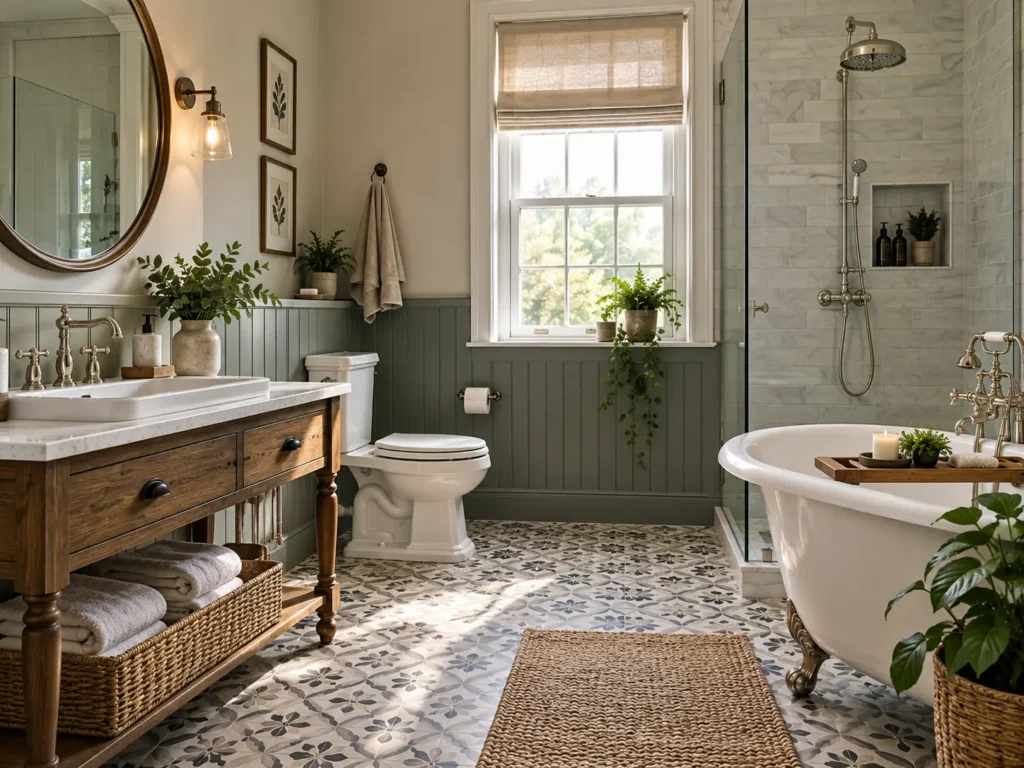
Large-format stone-effect tiles provide a clean background for traditional sanitaryware. Patterned floor tiles can add period characters, but use them selectively. Combining detailed floors with heavily patterned walls and ornate accessories can make the room feel too busy.
Add Modern Storage and Lighting
Fitted furniture, vanity storage and recessed shelving help keep toiletries organised while preserving a classic appearance.
Lighting is equally important. Traditional wall lights or pendants can create atmosphere, but task lighting around the mirror is essential for everyday use. Bathroom electrical installations must be suitable for their location, and Electrical Safety First recommends using a registered electrician for relevant work.
Don’t Forget Practicality and Safety
A bathroom must cope with water, steam, cleaning and daily use.
Good ventilation helps reduce condensation and moisture damage. In England, ventilation requirements are covered by Part F of the Building Regulations.
Flooring should be selected for slip resistance as well as appearance. The Health and Safety Executive recommends slip-resistant flooring in bathrooms and other areas where surfaces may become contaminated.
Approved Document G also covers sanitation, hot-water safety and water efficiency. If your renovation involves major plumbing, electrical or building work, check whether approval or a competent-person route applies.
How Much Does a Traditional Bathroom Cost?
The cost of a traditional style bathroom depends on the room, fittings, plumbing, tiling, labour and existing conditions.
Current 2026 UK guidance from Checkatrade puts a typical bathroom remodel at around £4,500, with broad projects ranging from approximately £1,500 to £7,500. High-end or complex renovations can cost considerably more.
Location, property condition, plumbing access, fitting quality, waste removal and specialist work can all affect the final price. Request itemised quotations and compare several quotes where appropriate.
Freestanding baths, bespoke furniture, specialist tiles and extensive brassware can increase costs. Spend more on features you will use every day and choose simpler finishes elsewhere.
Common Mistakes to Avoid
Trying to recreate a complete historical bathroom can make the room feel visually heavy. Avoid combining ornate taps, patterned tiles, decorative furniture, vintage accessories and period lighting all at once.
Do not choose style before considering layout. A freestanding bath is not practical if it leaves too little circulation space.
Installation quality also matters. Poor sealing, incorrect drainage, uneven floors and badly fitted plumbing can undermine an expensive design. This is especially relevant in older London properties, where existing layouts and building conditions may create additional challenges.
Traditional design is about enduring shapes and materials, not outdated technology or excessive decoration.
A Simple Formula for a Modern Traditional Bathroom
Choose one traditional hero feature, add two or three supporting classic details, then keep the remaining elements clean and contemporary.
For example, combine a soft blue vanity, white basin, brushed brass taps, simple metro tiles, a patterned floor and a frameless mirror. The room will retain traditional character while feeling balanced and modern.
That balance is the heart of successful classic bathroom design.
Key Takeaways
A modern traditional style bathroom should feel timeless rather than theatrical. Use traditional shapes selectively, control the colour palette and combine heritage-inspired fixtures with modern storage, lighting, ventilation and water-saving features.
Design around real life so the bathroom is comfortable, easy to maintain and safe as well as attractive.
Frequently Asked Questions
1. How can I make a traditional bathroom look modern?
Use traditional features selectively rather than decorating every part of the room in a period style. Combining classic sanitaryware with contemporary storage, simple tiles, modern lighting and restrained colours can create a timeless result.
2. What colours work best in a traditional style bathroom?
Soft whites, creams, sage greens, muted blues, stone shades and understated heritage colours work particularly well. The key is to limit the palette so the room feels coordinated rather than overly decorative.
3. Can I mix modern and traditional bathroom fixtures?
Yes. Mixing the two styles is one of the best ways to prevent a traditional bathroom from looking dated. A classic bath or basin can work very well with modern shower technology, practical storage and contemporary mirrors.
4. Are traditional bathrooms suitable for small bathrooms?
Yes, but proportion is important. In a small bathroom, choose one main traditional feature and keep other elements visually simple to prevent the space from feeling crowded.
5. Are freestanding baths practical in traditional bathrooms?
They can be, provided there is sufficient space around the bath for comfortable access and cleaning. The weight of some baths and the condition of the existing floor should also be considered before installation.
6. What tiles look best with classic bathroom design?
Metro tiles, simple rectangular tiles, stone-effect finishes and carefully selected patterned floor tiles can all work well. The best choice depends on the size of the room and how many other traditional features you plan to include.
7. How much does a traditional bathroom cost in the UK?
Costs vary significantly according to specification and installation work. Current 2026 guidance suggests that a typical UK bathroom remodel averages around £4,500, while higher-end projects can cost considerably more.
8. How do I make a traditional bathroom easier to maintain?
Choose durable, easy-clean surfaces and avoid excessive small decorative details that create more areas for dirt and limescale to collect. Good ventilation, appropriate sealing and sensible storage also make everyday maintenance easier.
9. Do I need professional help to install a traditional bathroom?
Professional installation is particularly useful when plumbing, electrical work, waterproofing or major layout changes are involved. Electrical work in bathrooms has specific safety requirements, while building regulations can apply to certain alterations.
10. Is traditional bathroom design still fashionable?
Yes. Current 2026 bathroom inspiration continues to combine heritage shapes, classic colours and period-inspired details with modern functionality. The modern approach is less about copying one historical period and more about creating a balanced, timeless interior.