
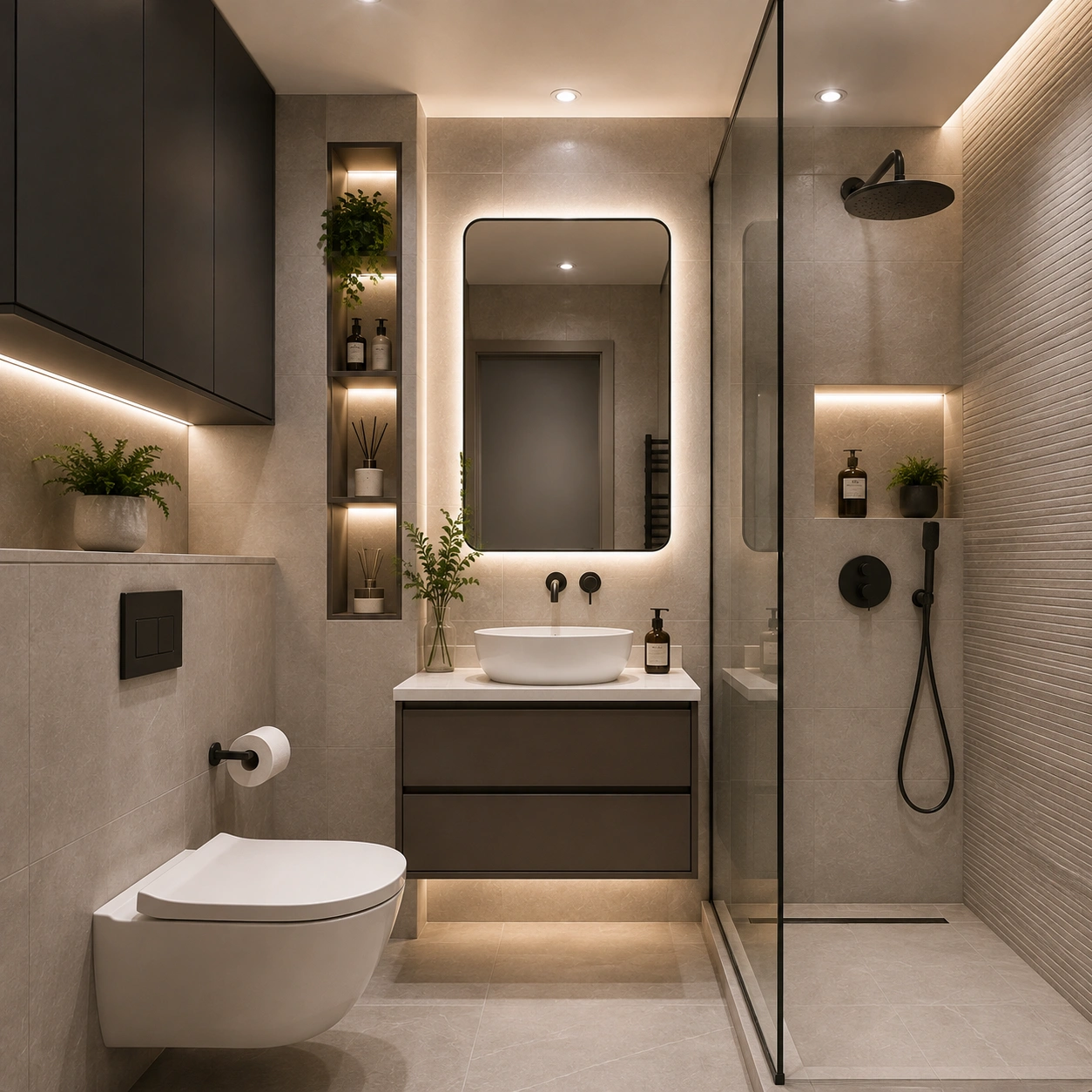
Wet Room on a Budget: 10 Ways to Reduce Costs Without Compromising Quality
Creating a wet room on a budget does not mean choosing the cheapest fittings or cutting corners. Understand where your money goes, control unnecessary work and invest in the parts that protect your bathroom long term.
A properly planned wet room can be practical, stylish and accessible. UK cost guides vary widely: Checkatrade estimates around £5,000–£13,000, while MyJobQuote reports approximately £4,000–£7,000. Room condition, drainage, floor preparation, location, labour and specification all affect the final price.
How Much Does a Wet Room Cost?
There is no universal price for an affordable wet room because every property presents different challenges.
Using an existing bathroom layout is usually simpler than converting another room, moving drainage, strengthening a timber floor or altering walls. MyJobQuote‘s 2026 guide gives an indicative installed cost of £4,675 for a small 2m × 2m wet room in a Midlands property, while Checkatrade gives a broader UK average of approximately £9,000. These are guides, not quotations.
| Cost Decision | Usually Saves Money | Can Increase the Budget |
|---|---|---|
| Bathroom layout | Keeping existing positions | Moving toilet or drainage |
| Flooring | Suitable standard finishes | Structural floor rebuilding |
| Tiles | Mid-range standard tiles | Natural stone or complex patterns |
| Fittings | Reliable mid-range products | Designer or bespoke products |
| Features | Essential features first | Underfloor heating and smart controls |
The lesson is simple: control the scope before cutting quality.
10 Ways to Create a Wet Room on a Budget
1. Keep Your Existing Layout
Moving plumbing can quickly increase a bathroom budget. Keeping the toilet, basin and shower near their existing positions reduces pipework alteration and disruption, while new tiles, fittings, lighting and storage can still transform the room.
This is especially valuable in older London properties, where pipework access may be complicated.
Key takeaway: Changing the appearance is usually less disruptive than changing the plumbing.
2. Do Not Economise on Waterproofing
A budget wet room should never become a cheap wet room where waterproofing is concerned.
Floors, shower areas, joints, corners and drainage connections need a reliable waterproofing system to prevent water reaching the building structure. The UK Government’s Approved Document C covers resistance to moisture, while Approved Document H covers drainage and waste disposal in England.
Saving on waterproofing can lead to a much larger repair bill if water reaches the subfloor or surrounding structure.
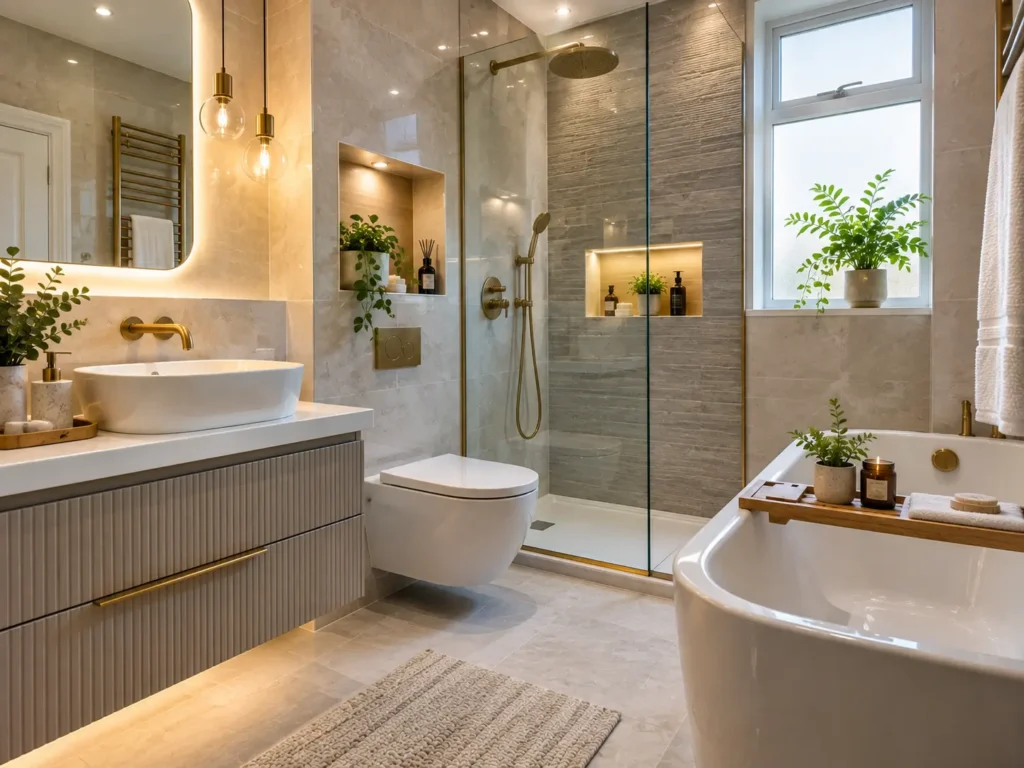
3. Choose the Right Drainage System
Water must travel efficiently towards the drain, so the floor needs an appropriate gradient and the drainage arrangement must suit the building.
Upstairs installations can be more complex because of timber floors, restricted floor depth and awkward waste-pipe routes. Checkatrade identifies drainage, floor preparation and structural work as significant cost factors.
Before accepting a quotation, ask how the floor will be prepared and request details of the drainage route, floor level and waterproofing method.
4. Use Sensibly Priced Tiles
You do not need expensive marble or designer porcelain. Good-quality standard tiles can provide a clean, modern finish without taking over the budget.
Large-format tiles may reduce grout lines but can be harder to install around slopes, corners and drainage. Choose tiles that suit the room, perform properly and can be installed efficiently.
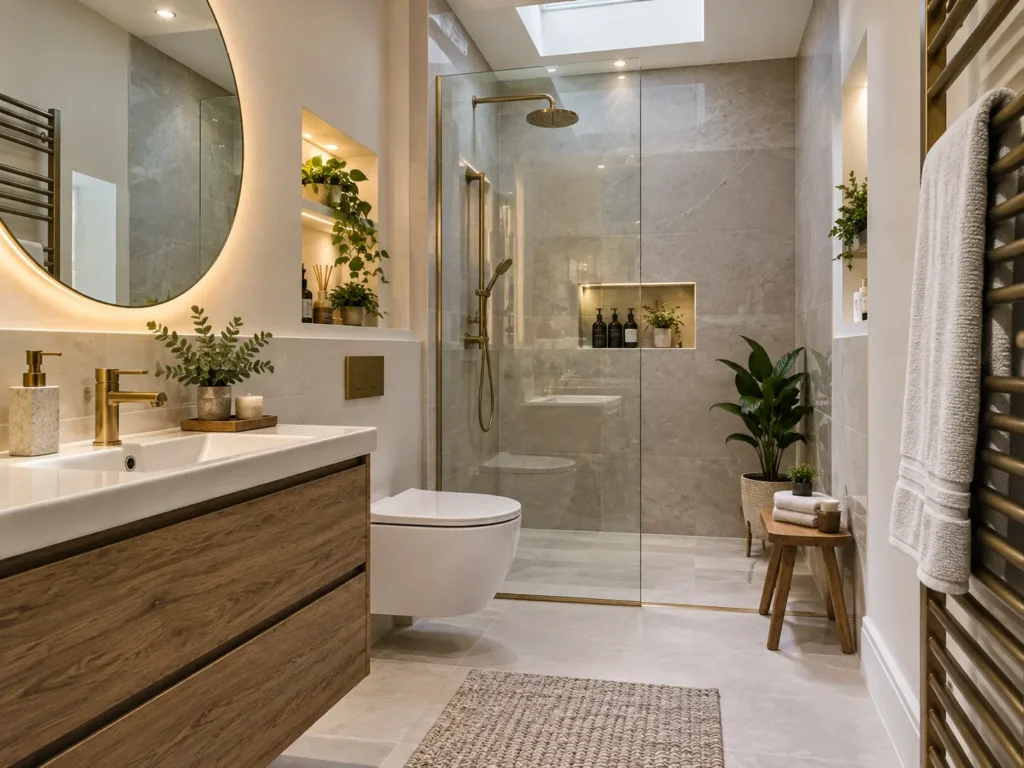
5. Choose Mid-Range Bathroom Fittings
Toilets, basins, taps and showers do not need luxury brand names to look good.
Reliable mid-range products usually provide the performance homeowners need. Spend more where durability, installation quality or water management matter, rather than paying only for appearance. A simple wall-hung basin, quality mixer and well-chosen shower screen can still look premium.
6. Avoid Unnecessary Structural Changes
Removing walls or rebuilding the floor can turn a straightforward project into a major renovation.
Before changing the room’s footprint, consider whether better positioning of fittings can achieve the same result. This is particularly important when creating an affordable wet room.
Key takeaway: A clever layout can often achieve more than an expensive structural alteration.
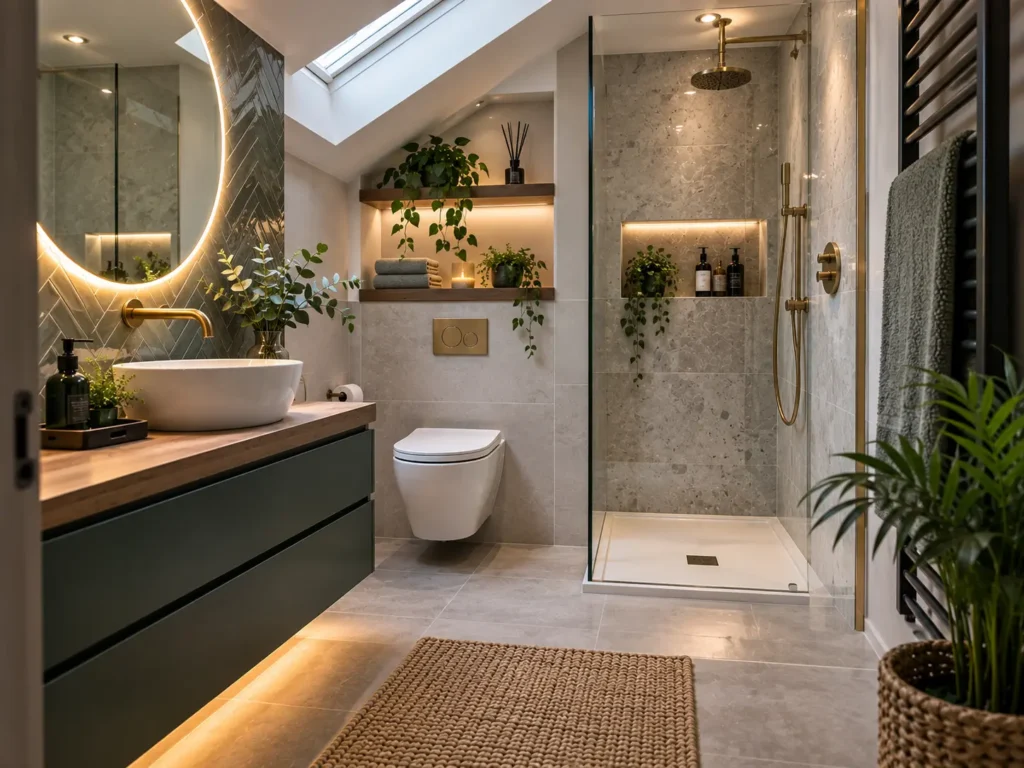
7. Compare Detailed Quotations
Do not choose a contractor based only on the lowest headline price.
Check whether the quotation includes waterproofing, drainage, floor preparation, tiling, grouting, plumbing, waste removal, electrical work and ventilation. A £6,000 quote excluding essential work may cost more than a £7,000 quote that includes everything.
8. Prioritise Essentials Before Luxury Features
Heated floors, designer lighting, smart showers and premium accessories can be added later.
With a tight budget, prioritise waterproofing, drainage, ventilation, quality installation and reliable sanitaryware. Decorative upgrades can follow if the installation has been designed to accommodate them.
9. Do Not DIY the Critical Work
DIY may reduce labour costs, but wet-room construction is not ideal for experimentation.
Poor drainage falls, inadequate waterproofing and incorrect electrical work can create hidden problems. The UK Government’s Approved Documents provide statutory guidance covering sanitation, drainage, moisture and other building-regulation requirements.
Removing old accessories or painting may be suitable DIY tasks. Specialist waterproofing, plumbing, drainage and electrical work require appropriate expertise.
10. Keep Money Aside for Unexpected Problems
Removing an old bathroom can reveal damaged flooring, defective pipework, misplaced drainage, uneven surfaces or previous alterations.
Checkatrade notes that floor replacement, drainage problems, timber repairs and failed waterproofing can substantially increase wet-room costs. A contingency fund helps prevent unexpected problems from forcing compromises on essential work.
What Should You Never Cut Costs On?
The golden rule of a wet room on a budget is to reduce unnecessary specification, not essential workmanship.
Waterproofing and drainage deserve particular attention because they sit beneath the finished surfaces. Ventilation is also important because bathrooms generate moisture, and England’s Building Regulations address it through Approved Document F.
Approved Document G covers sanitation and water efficiency, while Approved Document H covers drainage. Removing essential waterproofing, reducing drainage preparation or ignoring ventilation is not a genuine saving; it simply transfers today’s cost into tomorrow’s repair bill.
Common Budget Wet Room Mistakes
A wet room is not simply a bathroom without a shower tray. The floor, drainage and waterproofing must work together.
Do not choose products before checking the room’s technical limitations. A drain, floor system or shower design may not suit the existing floor depth.
Finally, a small room is not automatically cheap. Compact spaces can still require complex drainage or floor preparation.
Key Takeaways
A successful wet room on a budget starts with good planning.
Keeping the existing layout, choosing sensible finishes, selecting reliable mid-range fittings and avoiding unnecessary luxury features can control spending without making the room feel basic.
Protect waterproofing, drainage, floor preparation, ventilation, electrical safety and professional workmanship.
The right question is not, “How cheaply can I build a wet room?” It is, “Where can I save money without creating future problems?”
Frequently Asked Questions
1. Can I have a wet room on a small budget?
Yes, provided the project is planned carefully. Keeping the existing layout and selecting practical mid-range finishes can reduce costs, but waterproofing and drainage should not be treated as areas for cutting corners.
2. What is the cheapest way to create a wet room?
Keeping existing plumbing and drainage positions is often one of the most effective ways to control the budget. You can then save further through sensible tile, sanitaryware and accessory choices.
3. How much does a wet room cost in the UK in 2026?
Published 2026 estimates vary significantly depending on the property and specification. Checkatrade gives a typical range of around £5,000–£13,000, while MyJobQuote reports approximately £4,000–£7,000 for a typical installation.
4. Is a wet room cheaper than a walk-in shower?
Usually, no. A wet room generally requires more extensive waterproofing and drainage preparation, while a walk-in shower can often use a conventional shower tray.
5. Can I use inexpensive tiles in a wet room?
Yes, provided the tiles are suitable for their intended application and installed correctly. The shower floor requires particular care because slip resistance, tile size, falls and drainage all need to work together.
6. Can I install a wet room myself?
Some decorative preparation may be suitable for DIY, but a complete wet room is technically demanding. Waterproofing, drainage, plumbing and electrical work can have serious consequences if installed incorrectly.
7. Does a wet room need waterproofing?
Yes. Waterproofing is a fundamental part of a wet-room installation because water needs to be prevented from reaching the underlying building structure. The exact system should be appropriate for the floor, walls and installation method.
8. Can you install a wet room upstairs?
Yes, but the existing floor structure and drainage need careful assessment. Older timber floors and restricted drainage routes can make upstairs installations more complicated and potentially more expensive.
9. Do wet rooms cause dampness?
A correctly designed, waterproofed and ventilated wet room should not inherently cause dampness. Moisture problems are more likely when waterproofing, drainage or ventilation has been poorly designed or installed.
10. What is the best way to reduce wet-room costs?
Start with a clear specification and keep the existing layout where practical. Compare itemised quotations and spend your budget on waterproofing, drainage, ventilation and workmanship before adding luxury features.