
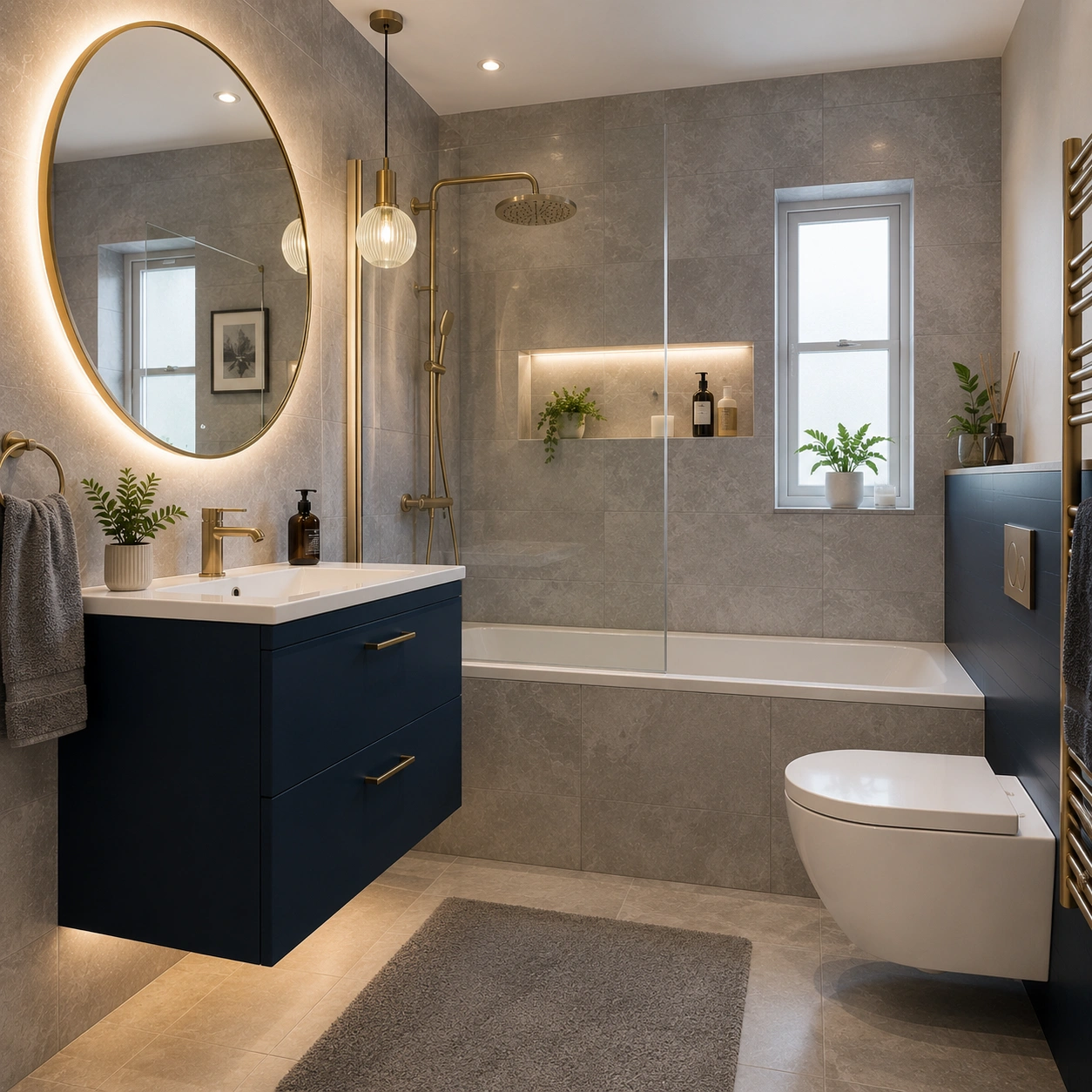
Bathroom Refurbishment London: Update Your Space Without a Full Rebuild
A tired bathroom does not always need to be stripped back to the walls and rebuilt from scratch. In many London homes, a well-planned bathroom refurbishment London project can completely transform the look, functionality, and comfort of a bathroom while avoiding the disruption, expense, and lengthy timelines associated with a full renovation.
With property owners increasingly looking for cost-effective home improvements, bathroom refurbishments have become one of the most practical ways to modernise a space. Whether your tiles look dated, fixtures are showing signs of wear, or storage no longer meets your needs, targeted upgrades can deliver impressive results without major structural work.
Industry research shows that the global bathroom remodelling market continues to grow steadily as homeowners invest in updating existing spaces rather than relocating. Rising property values, ageing housing stock, and increased demand for modern, efficient bathrooms are driving refurbishment projects worldwide.
What Is Bathroom Refurbishment?
Bathroom refurbishment focuses on improving and updating an existing bathroom while keeping much of the original layout intact.
Unlike a complete renovation, refurbishment typically involves replacing worn or outdated elements, improving functionality, and refreshing finishes without moving major plumbing systems or rebuilding walls.
Common refurbishment works include:
- Replacing bathroom suites
- Installing new wall and floor tiles
- Updating taps and fixtures
- Upgrading lighting
- Improving ventilation
- Installing modern storage solutions
- Refreshing decoration and finishes
Because the existing infrastructure often remains in place, refurbishment projects are usually completed faster and at a lower cost than full renovations.
Refurbishment vs Full Renovation
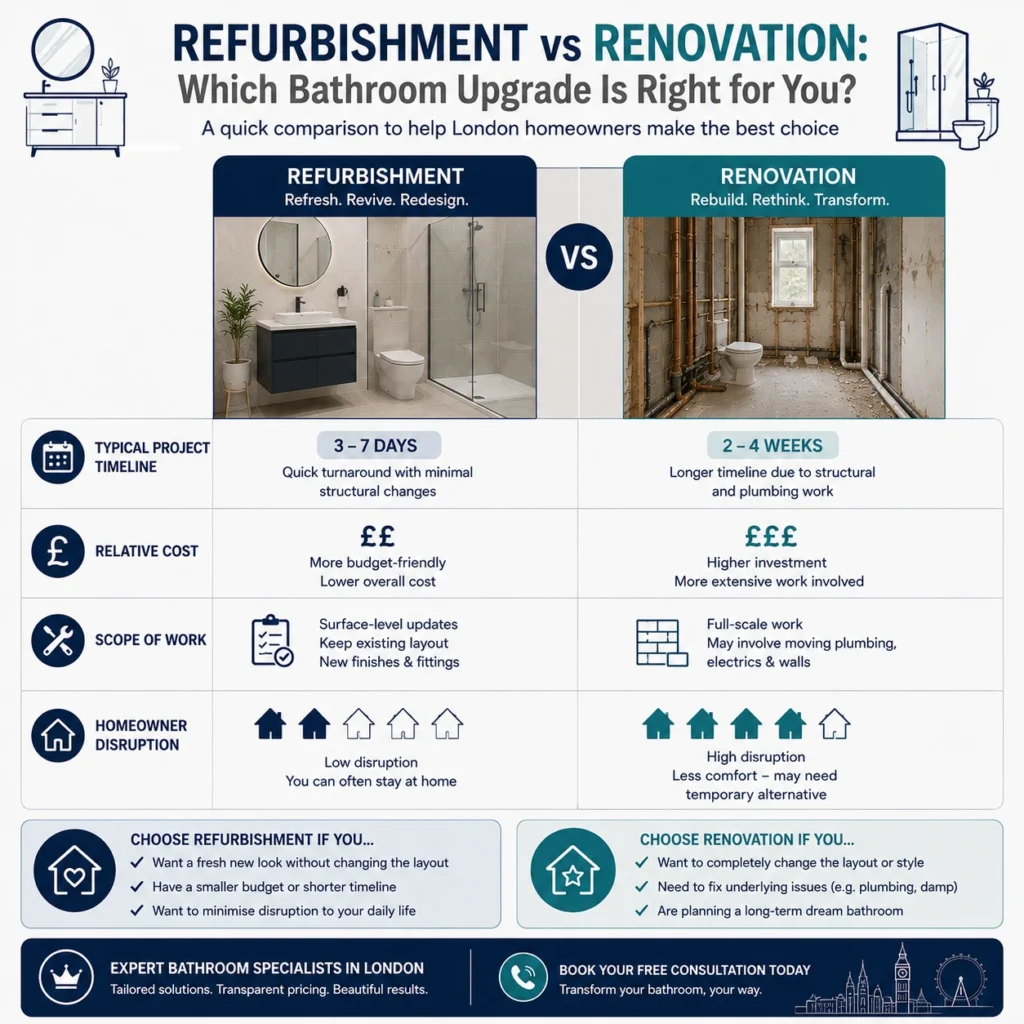
Many homeowners use the terms refurbishment and renovation interchangeably, but they involve different levels of work.
A bathroom refurbishment focuses on updating and improving the existing space without making major structural changes. This often includes replacing tiles, upgrading fixtures, installing new bathroom furniture, refreshing lighting, and improving functionality while keeping the current plumbing layout largely intact.
A full bathroom renovation, on the other hand, is a more extensive project that may involve redesigning the room layout, relocating plumbing and electrical systems, removing walls, or carrying out structural alterations. While renovations offer greater flexibility, they typically require a larger budget, a longer completion time, and more disruption to daily life.
For many London homeowners, refurbishment provides an effective way to modernise an outdated bathroom, improve comfort, and enhance property appeal without the cost and inconvenience of a complete rebuild.
Feature | Bathroom Refurbishment | Full Bathroom Renovation |
Scope of Work | Updates existing features and finishes | Complete redesign and reconstruction |
Plumbing Changes | Minimal or none | Often requires relocation of pipework |
Structural Alterations | Rarely required | May involve walls, floors, or layout changes |
Project Duration | Typically a few days to two weeks | Often several weeks or longer |
Cost Investment | More budget-friendly | Higher overall investment |
Household Disruption | Limited | Significant |
Best For | Modernising an existing bathroom | Creating an entirely new bathroom layout |
Why London Homeowners Are Choosing Refurbishment Over Full Rebuilds
Many London properties feature bathrooms that remain structurally sound but look outdated or lack modern functionality. Rather than investing in expensive reconstruction work, homeowners are increasingly choosing targeted improvements.
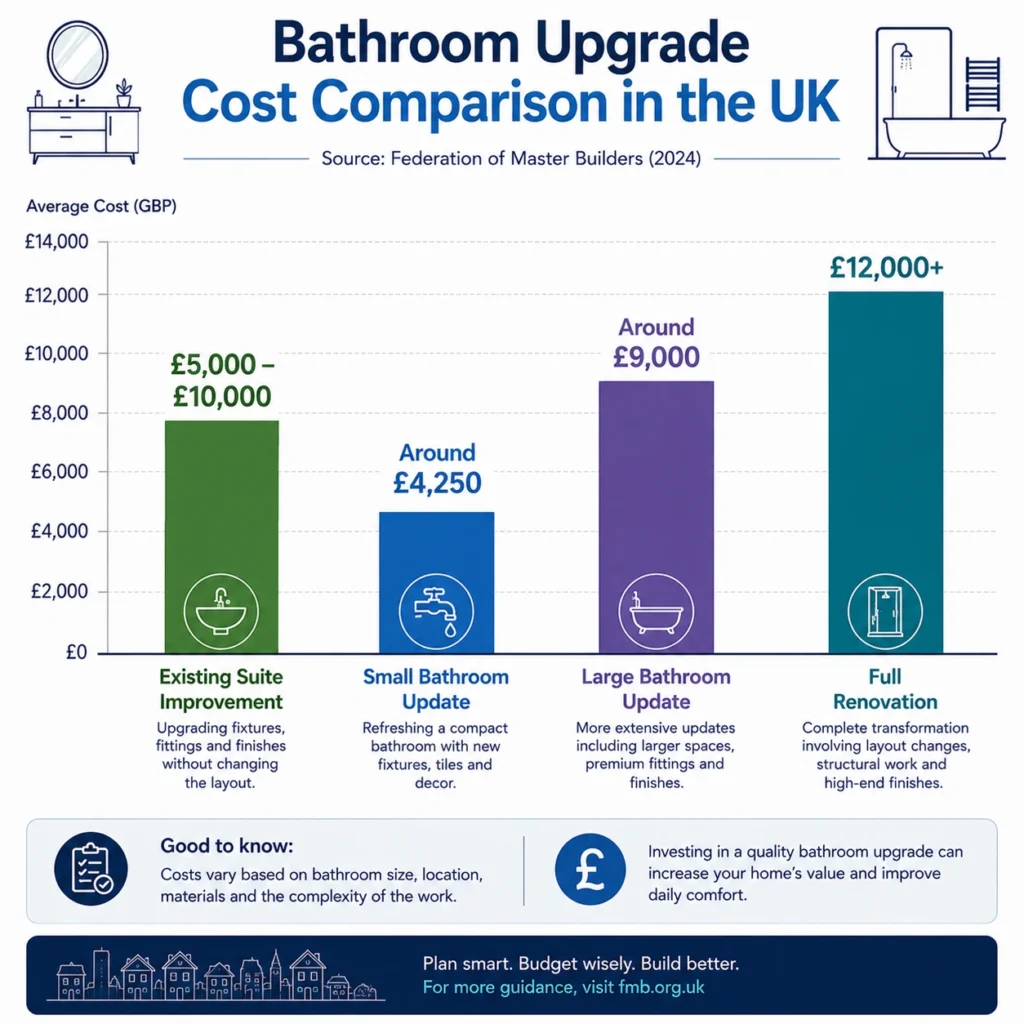
According to the Federation of Master Builders, updating an existing bathroom generally costs less than a complete renovation. The organisation reports that upgrading an existing suite often falls between £5,000 and £10,000, while full renovations can start from £12,000 and rise significantly depending on scope.
For many households, refurbishment offers a practical balance between investment and results.
Another factor is London’s housing stock. Many homes and flats have compact bathroom layouts where moving plumbing or altering structures may not provide enough additional benefit to justify the extra cost.
Signs Your Bathroom Needs Refurbishment
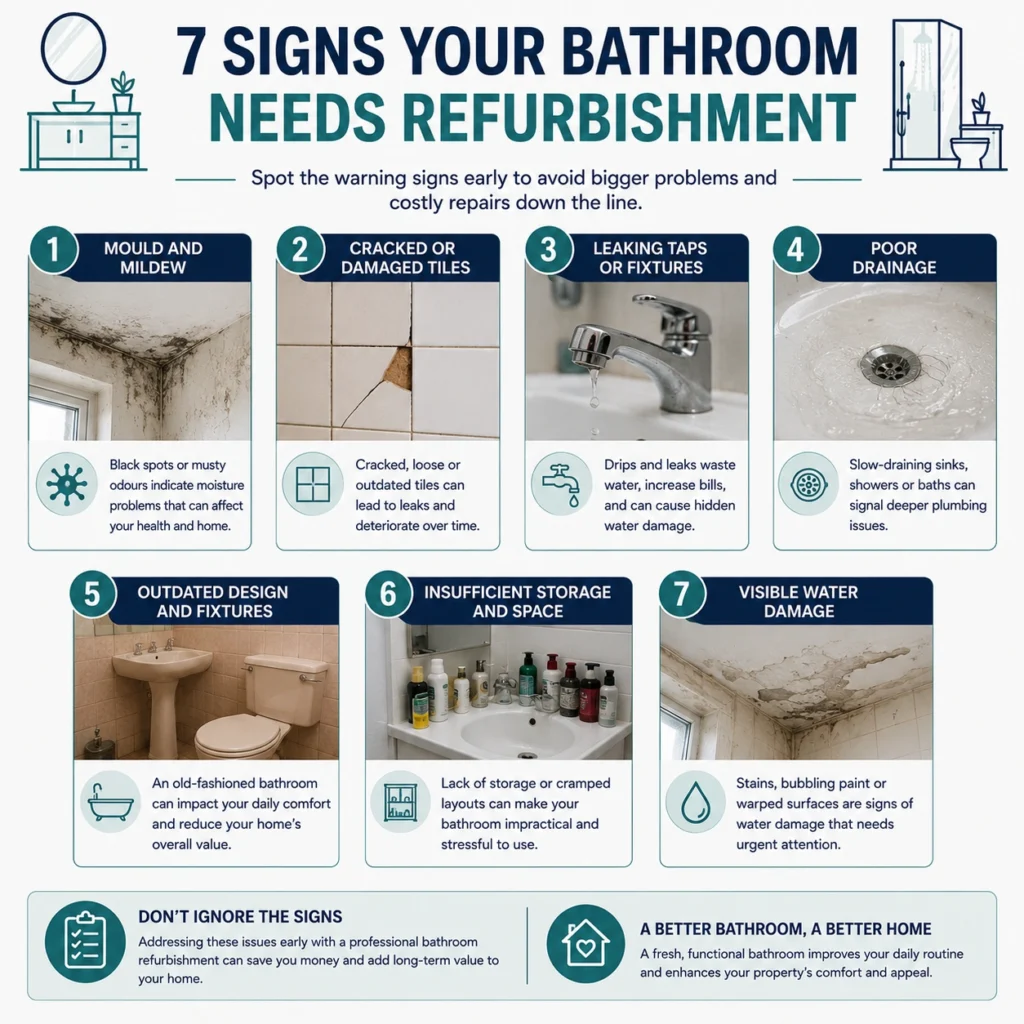
Bathrooms often provide clear warning signs when they need updating.
Outdated tiles, worn grout, damaged sealant, and ageing fixtures can make the room feel neglected even when the structure remains perfectly serviceable.
You may benefit from a refurbishment if:
Fixtures Are Showing Their Age
Old taps, toilets, basins, and shower fittings can become inefficient and visually dated. Replacing these elements instantly modernises the room.
Storage Is No Longer Practical
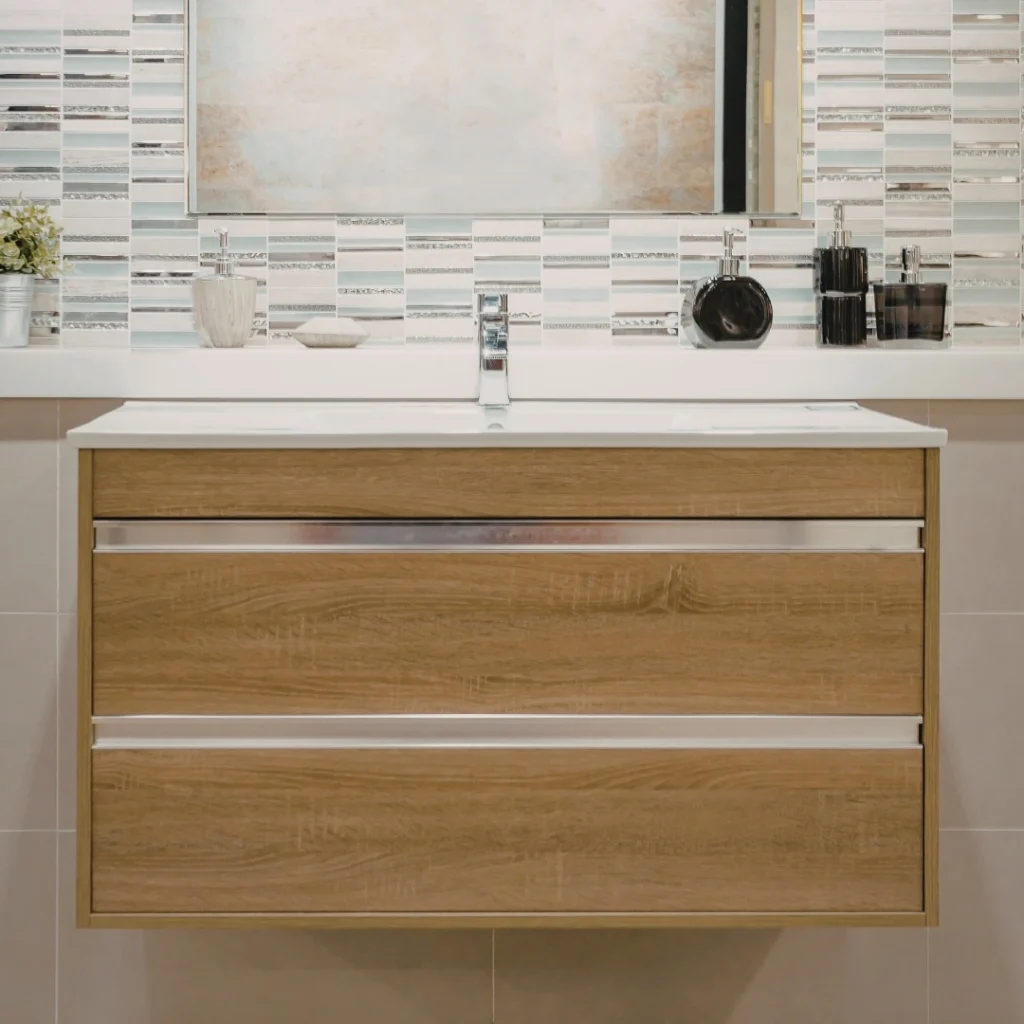
Many older bathrooms lack adequate storage. Modern vanity units and integrated solutions can improve organisation without changing the layout.
Water Damage Is Appearing
Peeling paint, mould growth, and deteriorating grout may indicate moisture issues that need addressing before they worsen.
Energy Efficiency Is Poor
Upgrading lighting, ventilation systems, and water-efficient fittings can improve performance and reduce running costs.
High-Impact Bathroom Refurbishment Upgrades
Not every upgrade delivers equal value. Some improvements offer significantly greater visual and practical benefits than others.
Modern Tiling
New wall and floor tiles can completely change the appearance of a bathroom.
Contractors consistently identify high-quality tiling as one of the most effective improvements because it enhances aesthetics while improving durability and water resistance.
Upgraded Shower Areas
A professionally waterproofed shower area provides long-term performance and improved usability.
Industry experts regularly rank quality shower upgrades among the most valuable bathroom improvements due to their impact on both daily comfort and property appeal.
Improved Lighting
Lighting significantly influences how spacious and welcoming a bathroom feels.
Replacing outdated fittings with modern LED solutions can instantly refresh the room while improving energy efficiency.
Modern Storage Solutions
Storage often becomes a challenge in London bathrooms where space is limited.
Refurbishment projects frequently incorporate:
- Vanity units
- Mirror cabinets
- Recessed shelving
- Space-saving storage systems
How Bathroom Refurbishment Can Increase Property Appeal
Bathrooms remain one of the most scrutinised rooms during property viewings.
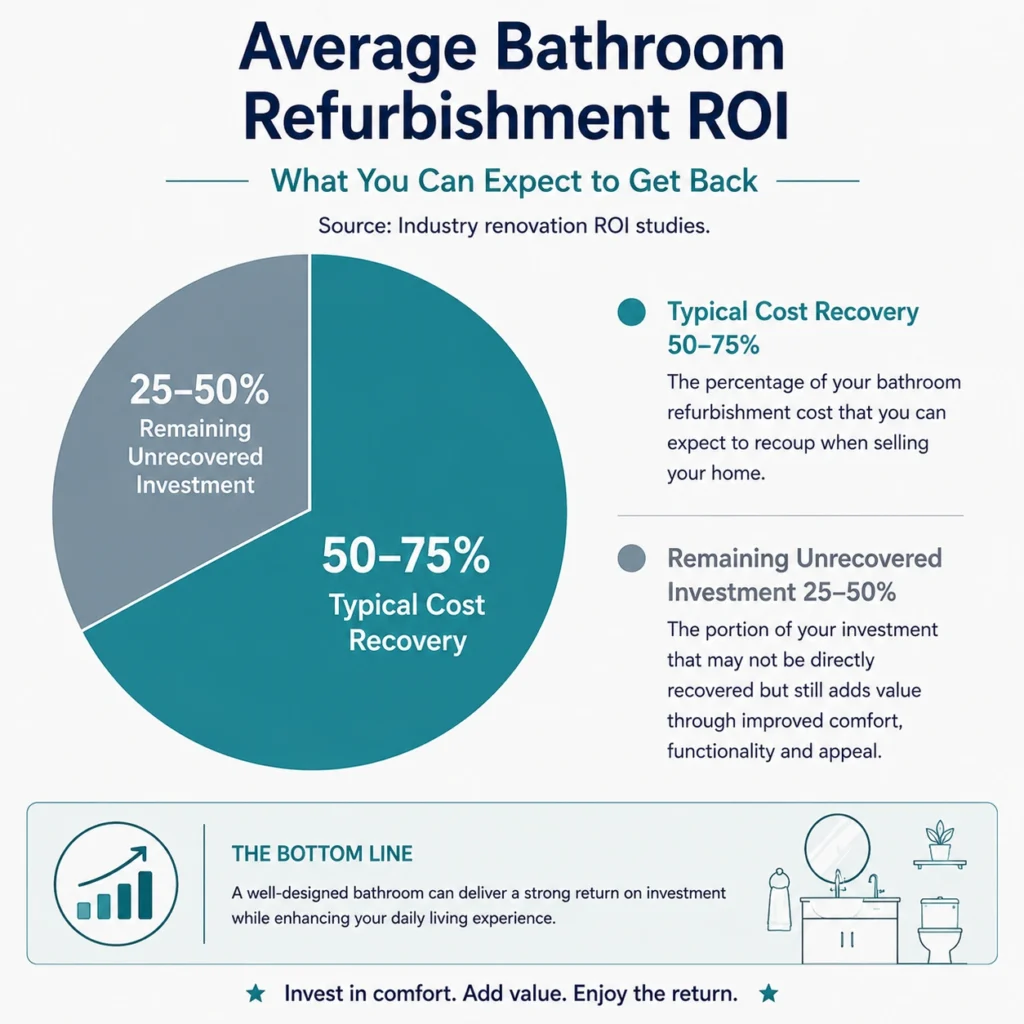
Research indicates that bathroom improvements can generate strong returns on investment. Several housing and renovation studies estimate that bathroom upgrades commonly recover between 50% and 75% of their costs, with minor refurbishments often delivering better returns than large-scale luxury remodels.
Potential buyers often view outdated bathrooms as future expenses. A recently refurbished bathroom can therefore improve perceived property value and buyer confidence.
Bathroom Upgrade & Equity Calculator
Estimate cosmetic renovation costs alongside the potential value added to your property asset.
Your Renovation Financial Breakdown
Refurbishment ROI Commentary:
Bathroom Remodelling London vs Refurbishment: Which Option Makes Sense?
Many homeowners researching bathroom remodelling London projects wonder whether refurbishment is enough.
The answer depends on the condition of the existing space.
If the current layout works well and plumbing remains functional, refurbishment is often the more sensible choice.
A full remodelling project may be necessary when:
- Layout changes are required
- Plumbing needs relocation
- Structural repairs are needed
- Accessibility requirements have changed
However, when the goal is simply to modernise and improve performance, refurbishment usually delivers the best balance of cost, speed, and results.
Common Mistakes to Avoid During Bathroom Refurbishment
Even relatively straightforward projects can encounter problems when planning is inadequate.
Choosing Appearance Over Durability
Bathrooms face constant moisture exposure. Materials should prioritise long-term performance as well as visual appeal.
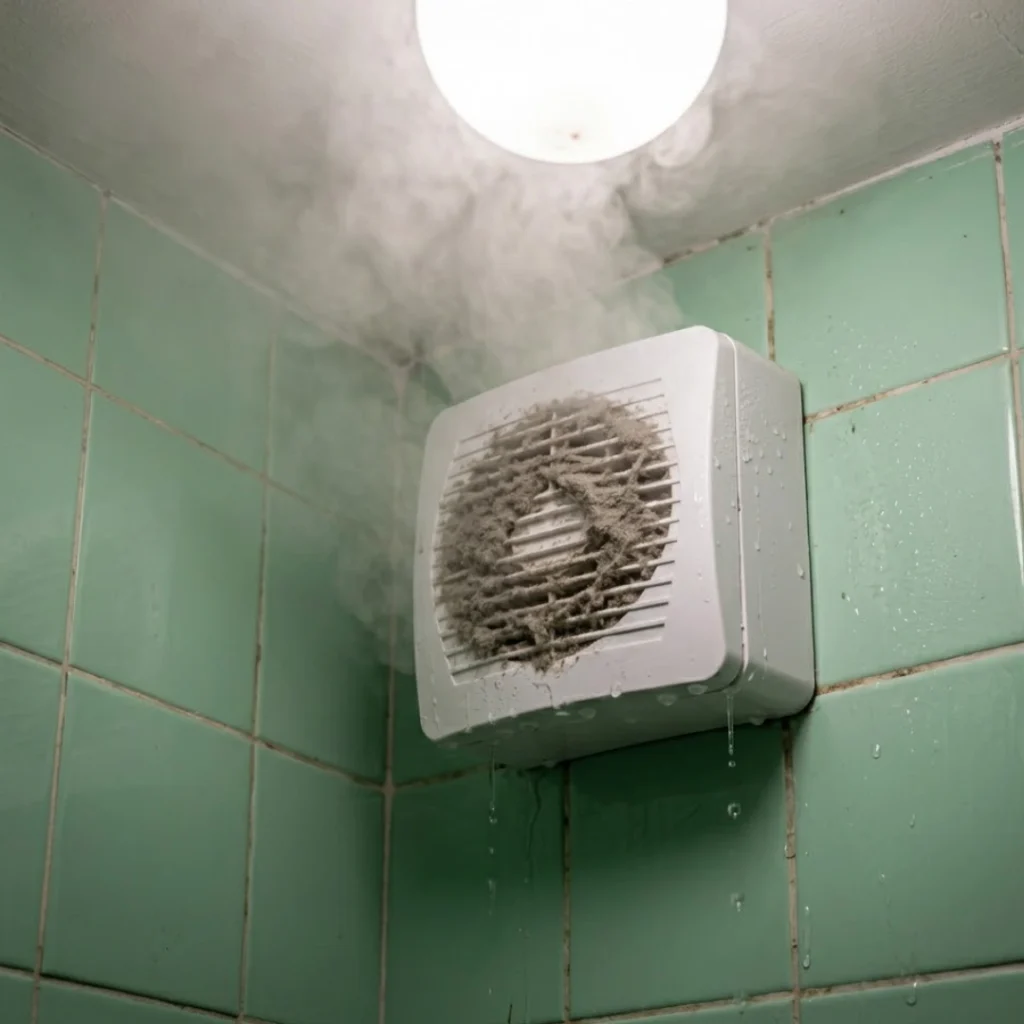
Ignoring Ventilation
Poor ventilation contributes to condensation, mold, and premature wear.
Overlooking Waterproofing
Professional waterproofing remains one of the most important elements of any bathroom improvement project.
Focusing Only on Visible Elements
Many homeowners budget heavily for finishes while neglecting hidden infrastructure improvements that support long-term performance.
Planning a Successful Bathroom Refurbishment London Project
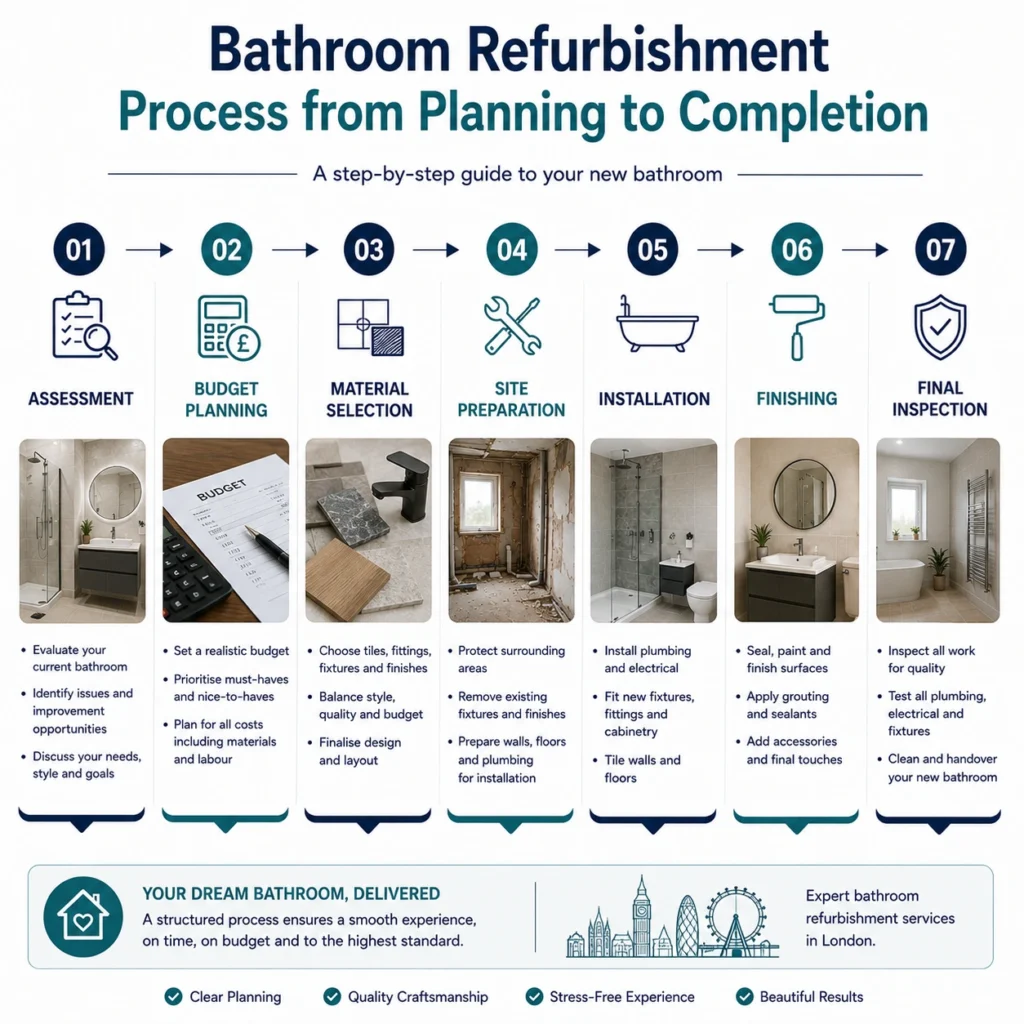
Successful refurbishment begins with clear objectives.
Before selecting materials or fixtures, homeowners should identify the key issues they want to solve. This could involve improving storage, updating finishes, increasing efficiency, or simply creating a more modern environment.
A realistic budget should also include contingency allowances for unforeseen issues that may emerge once existing finishes are removed.
Taking time to plan carefully helps ensure smoother delivery and better outcomes.
The Future of Bathroom Refurbishment in London
The bathroom improvement sector continues to expand as homeowners prioritise upgrading existing properties. Market forecasts suggest continued growth in bathroom remodelling and refurbishment demand over the coming decade, driven by ageing housing stock, property improvement trends, and increasing interest in efficient living spaces.
For many London homeowners, refurbishment offers a practical path to achieving a fresh, functional bathroom without the cost and disruption of a complete rebuild.
If you could change just one thing about your bathroom tomorrow, would it be the tiles, storage, lighting, or shower area—and why?
Frequently Asked Questions
1. What is included in a bathroom refurbishment in London?
A bathroom refurbishment typically includes updating existing fixtures, replacing wall and floor tiles, installing new bathroom furniture, upgrading lighting, improving ventilation, and refreshing the overall appearance of the space. Unlike a full renovation, refurbishment focuses on enhancing the existing bathroom without major structural changes.
2. How much does bathroom refurbishment cost in London?
The cost of a bathroom refurbishment in London varies depending on the size of the bathroom, the materials selected, and the scope of work. A basic refurbishment may start from a few thousand pounds, while more comprehensive upgrades can cost significantly more. Obtaining a professional assessment is the best way to receive an accurate quotation.
3. How long does a bathroom refurbishment take?
Most bathroom refurbishment projects can be completed within one to three weeks, depending on the complexity of the work involved. Projects that retain the existing plumbing layout are generally completed more quickly than those requiring extensive upgrades.
4. Is bathroom refurbishment cheaper than a full bathroom renovation?
Yes. Bathroom refurbishment is usually more cost-effective because it focuses on updating existing features rather than rebuilding the entire space. By keeping the current layout and plumbing systems, homeowners can often achieve a fresh, modern bathroom at a lower cost.
5. Can I refurbish my bathroom without changing the layout?
Absolutely. Many bathroom refurbishment projects are completed without altering the existing layout. Updating tiles, replacing sanitaryware, installing modern storage solutions, and upgrading lighting can dramatically improve the look and functionality of the bathroom while keeping plumbing in the same position.
6. Does bathroom refurbishment add value to a property?
A well-executed bathroom refurbishment can increase a property’s appeal and potentially boost its market value. Buyers often view modern, well-maintained bathrooms as a significant advantage when comparing homes.
7. What are the most popular bathroom refurbishment upgrades in London?
Popular upgrades include replacing outdated tiles, installing modern showers, upgrading bathroom suites, improving lighting, adding storage solutions, and enhancing ventilation systems. These improvements can significantly enhance both appearance and practicality.
8. Is bathroom refurbishment suitable for small bathrooms?
Yes. Bathroom refurbishment is particularly effective for small bathrooms because it allows homeowners to maximise available space through smarter storage, modern fixtures, and improved layouts without requiring major structural work.
9. How do I know if my bathroom needs refurbishment or a full renovation?
If your bathroom layout functions well but the fixtures, tiles, and finishes look outdated, refurbishment is often the best option. A full renovation may be necessary if there are structural issues, significant plumbing problems, or if you want to completely redesign the layout.
10. Why choose professional bathroom refurbishment services in London?
Professional bathroom refurbishment specialists ensure that tiling, waterproofing, plumbing, and installations are completed to a high standard. Expert workmanship helps improve durability, functionality, and the overall finish of the bathroom.