
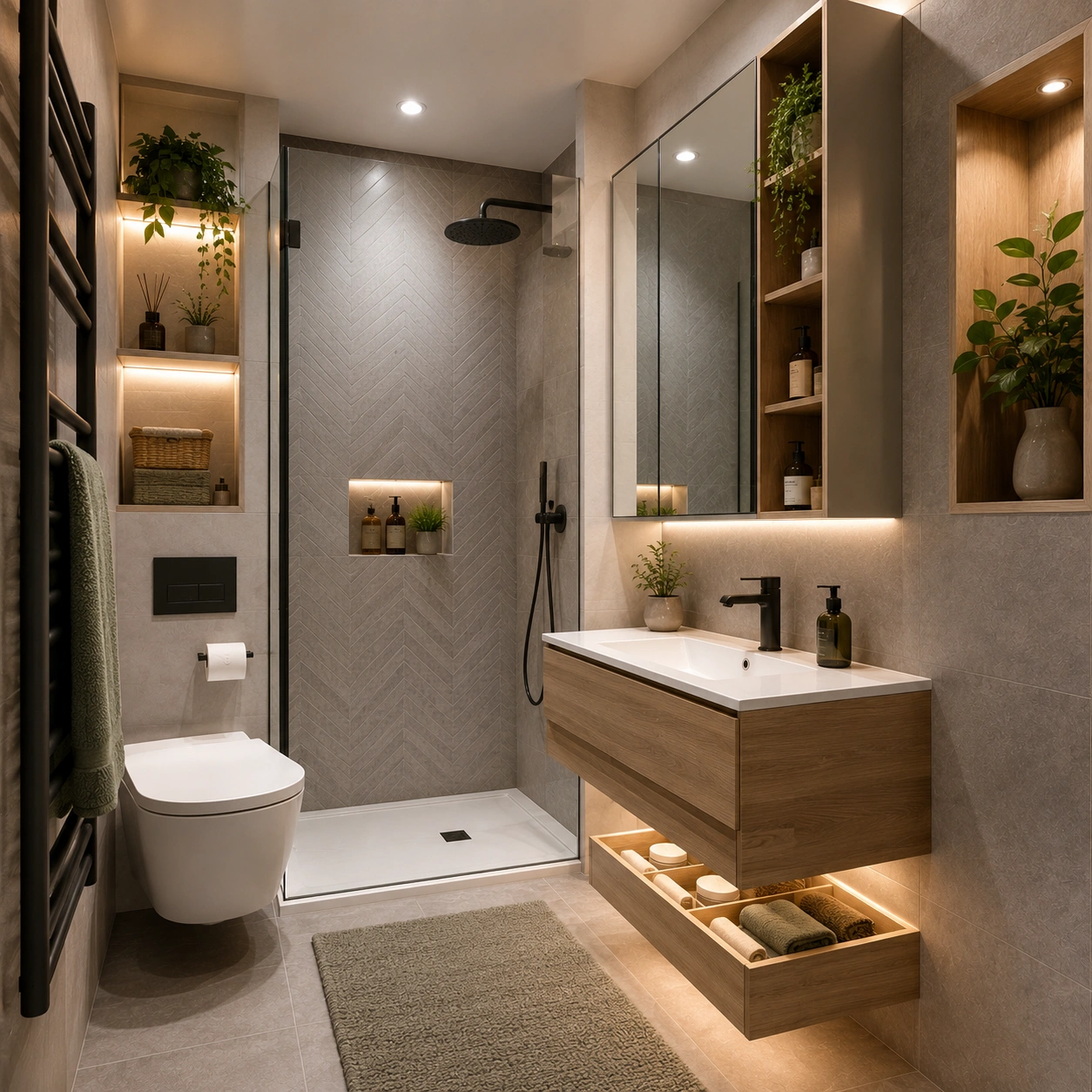
Wet Room Specialists in Redbridge: What Happens When Waterproofing Goes Wrong?
A wet room can look simple, but keeping water where it belongs takes careful planning. When homeowners search for wet room specialists in Redbridge, they are often looking for more than attractive tiles and modern fittings. They want confidence that the floor, walls, drainage points and joints will cope with daily water exposure without causing hidden damage.
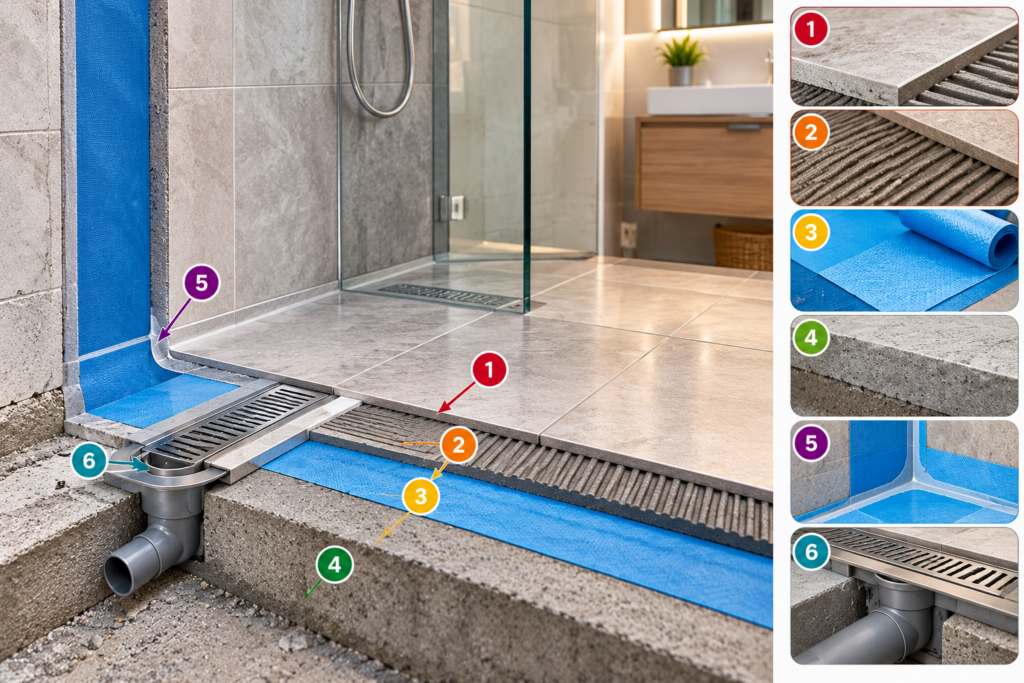
Waterproofing is especially important because tiles and grout alone should not be treated as the main waterproof barrier. NHBC guidance states that a waterproofing system should create an impervious layer behind the tiles, with junctions and penetrations appropriately sealed to form a watertight enclosure.
Why Wet Room Waterproofing Matters in Redbridge
A conventional bathroom usually contains water within a shower tray or bath. A wet room is different because water can reach a much larger part of the floor and surrounding surfaces.
That means the waterproofing system needs to work with the substrate, drainage, floor falls, wall junctions and chosen tiles. If one part is poorly installed, moisture can find a route underneath the finished surface.
The UK Government’s Approved Document C provides guidance concerning resistance to moisture in floors, walls and roofs, while Approved Document H covers foul-water drainage.
What Happens When Waterproofing Fails?
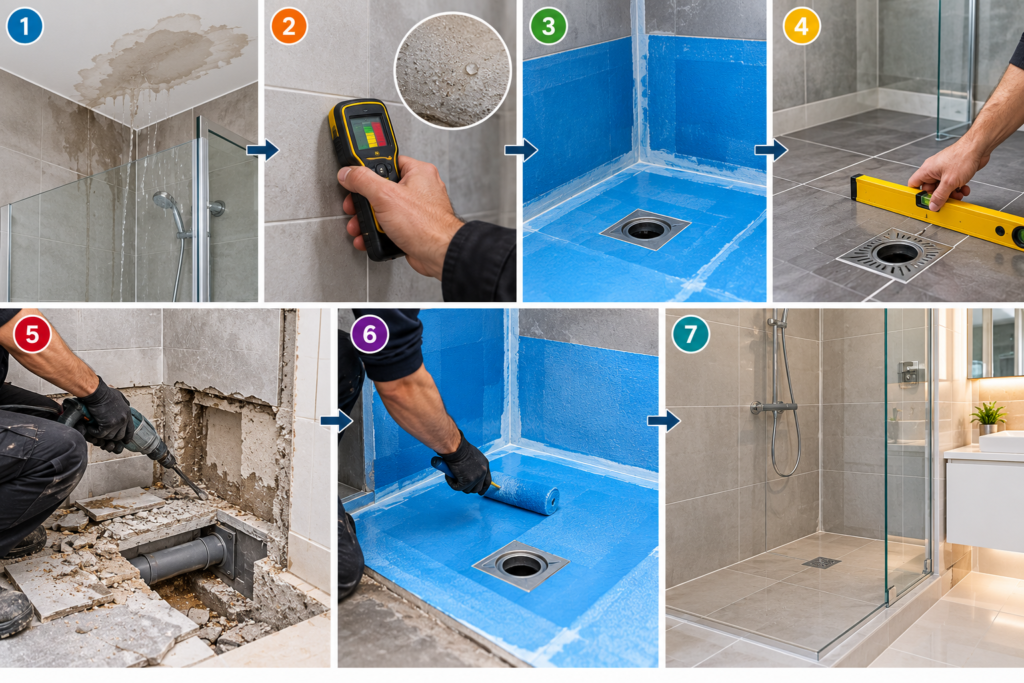
The first sign is not always a dramatic leak. Sometimes the problem appears as a loose tile, persistent damp smell, mould around a junction or discolouration on an adjoining wall.
Moisture can also move beneath tiles and into vulnerable substrates. Over time, repeated exposure may contribute to deterioration, staining or damage to surrounding finishes.
The most common weak points are usually areas where different materials or components meet. These include wall-to-floor junctions, corners, pipe penetrations, shower controls, drains and transitions between wet and dry areas.
A professional inspection should therefore look beyond the visible tile surface. Simply replacing grout may hide a symptom without addressing the waterproofing failure underneath.
Warning Signs You Should Not Ignore
If the bathroom develops unexplained dampness outside the shower area, tiles become loose or hollow-sounding, mould repeatedly returns, or an adjoining wall shows staining, investigate the cause promptly.
A blocked or poorly designed drain can create another problem. Water needs a suitable route to the waste system, and the floor needs an appropriate fall so that water does not remain where it should not.
How Wet Room Specialists Redbridge Diagnose the Problem
Experienced wet room specialists Redbridge homeowners contact should begin with diagnosis rather than immediately removing everything.
The first stage is usually a visual inspection of the shower area, floor, walls, drainage points, silicone joints, tile condition and visible plumbing connections. Depending on the symptoms, further investigation may be needed to identify where moisture is travelling.
The next question is whether the problem is local or systemic. A failed seal around one penetration may require a different repair from a defective waterproofing system covering the wider shower floor.
The surrounding construction also matters. Timber, plasterboard, masonry, concrete and different tile substrates have different moisture considerations. NHBC guidance specifically notes that waterproofing systems and membranes should be appropriate for the substrate and compatible with the tiling system.
Common Waterproofing Mistakes to Avoid
One common mistake is treating grout and silicone as the complete waterproofing solution. They are important finishing and sealing components, but they should not replace a properly designed waterproofing system.
Another problem occurs when installers waterproof the obvious shower area but overlook junctions, corners or penetrations. NHBC specifically highlights the need to seal connections around walls, showers, baths, floors and penetrations.
Poor drainage can create another weakness. Even a well-sealed shower can experience problems if water is allowed to sit on the floor instead of moving efficiently towards the waste.
Using incompatible products can also create avoidable failures. Waterproofing materials, adhesives, grout and tiles should work together as part of a suitable system rather than being selected independently.
Can You Have a Wet Room with a Tub and Shower London?
Yes. A wet room does not necessarily mean removing the bath.
A wet room with tub and shower London homeowners choose can combine a bathtub with an open or screened shower area, provided the layout, drainage and waterproofing are designed correctly.
The important point is that the presence of a bath does not remove the need to protect areas exposed to regular splashing. The waterproofing strategy should reflect where water is expected to reach and how the room will be used.
This can be particularly useful for family bathrooms where one person wants a quick shower while others still prefer bathing.
For accessibility, level-access showering can also make everyday use easier. The UK Government’s Approved Document M provides guidance relating to access and use of buildings, including sanitary accommodation and shower facilities.
How to Prevent Future Waterproofing Problems
The best time to prevent a wet room leak is before the tiles go down.
A proper installation should begin with a suitable substrate and waterproofing system. The floor should be prepared for effective drainage, while corners, junctions and service penetrations need appropriate sealing.
The waterproofing manufacturer’s installation requirements should also be followed rather than mixing systems without checking compatibility. Current manufacturer guidance demonstrates how complete wet-room systems can combine waterproof boards, sealing components, shower elements and integrated drainage.
After installation, keep drains clear and inspect silicone joints periodically. If a seal begins separating, deal with it early rather than waiting for visible water damage.
What a Professional Wet Room Inspection Should Include
A thorough inspection should consider the entire water-management system rather than focusing only on cosmetic defects.
That means checking the shower floor, drainage, falls, wall-to-floor junctions, corners, pipe penetrations, waterproofing details where accessible, tile condition and visible signs of moisture migration.
It should also consider the age of the installation and whether the original waterproofing system is known. Where significant work is required, homeowners should ask what will be removed, what will be replaced and how the repaired area will be tested before final finishes are installed.
CG Bathrooms Limited provides wet room installation and renovation services across London, with its published service information highlighting waterproofing, drainage and level-access wet-room solutions.
Key Takeaways
Waterproofing is the hidden part of a wet room, but it is arguably one of the most important. Tiles may create the finished appearance, while the waterproofing system beneath them helps protect the structure from moisture.
If you notice recurring mould, damp patches, loose tiles, damaged grout or unexplained moisture outside the shower area, investigate the cause rather than repeatedly repairing the visible symptom.
Choosing experienced wet room specialists Redbridge homeowners can trust also means asking how waterproofing, drainage, falls, junctions and penetrations will be handled before installation begins.
If you are planning a new wet room or dealing with signs of water ingress, CG Bathrooms Limited can assess the bathroom and discuss suitable renovation options.
Frequently Asked Questions
1. What is the most common cause of a wet room leak?
Leaks can result from failures around waterproofing junctions, penetrations, drainage connections or other poorly sealed areas. The visible location of water does not always identify the original source.
2. Can water leak through wet room tiles?
Tiles and grout should not be relied upon as the sole waterproof barrier. A properly designed waterproofing system beneath the finished surface helps prevent moisture from reaching the underlying structure.
3. Does a wet room need to be completely tanked?
The waterproofing extent depends on the room design, shower arrangement, construction and applicable system requirements. Areas exposed to direct or regular water need appropriate waterproofing and correctly sealed junctions.
4. How do I know if my wet room waterproofing has failed?
Warning signs can include recurring mould, loose tiles, damp smells, staining or moisture appearing outside the expected shower area. A professional inspection may be needed because some failures remain hidden beneath tiles.
5. Can a wet room be installed over a timber floor?
Wet rooms can be designed for different substrates, but the waterproofing system must be suitable for the construction. Manufacturer guidance should be followed carefully because timber-based substrates have specific moisture and movement considerations.
6. Can I have a bath and a shower in the same wet room?
Yes, a bathroom can combine a bath and shower when the layout, drainage and waterproofing are designed around both uses. The areas exposed to splashing need suitable protection.
7. How important is the wet room floor fall?
The floor fall helps direct shower water towards the drain instead of allowing it to collect elsewhere. The drainage design and shower element should therefore be considered together.
8. Can damaged wet room waterproofing be repaired without removing all the tiles?
Sometimes a localised repair may be possible, but it depends on where and how the failure occurred. If the underlying waterproofing system is defective across a larger area, more extensive opening-up and rebuilding may be necessary.
9. Should wet room waterproofing be checked before tiling?
Yes. Waterproofing should be completed according to the selected system before tiling, with junctions and penetrations properly sealed. NHBC guidance specifically describes waterproofing as a layer behind the tiles and says it should be installed before wall or floor tiling.
10. How can I choose reliable wet room specialists in Redbridge?
Ask how the installer will prepare the substrate, manage falls and drainage, waterproof junctions and penetrations, and deal with the chosen tile system. A clear written specification is also useful because it shows exactly what waterproofing products and installation stages are included.