
High End Bathroom Renovations in Wimbledon: Where Should You Spend More & Where Should You Save?
Planning high end bathroom renovations Wimbledon homeowners can enjoy for years is not simply about choosing the most expensive fittings. The real luxury comes from getting the fundamentals right, then spending selectively on the features you see, touch and use every day. A beautiful marble finish will not compensate for poor waterproofing, awkward plumbing or weak ventilation.
The smartest approach is to divide your budget into three areas: things worth investing in, things where a sensible mid-range choice works perfectly, and purely decorative upgrades where you can save.
Where Should You Spend More?
The first place to invest is the work that will be difficult or expensive to correct later.
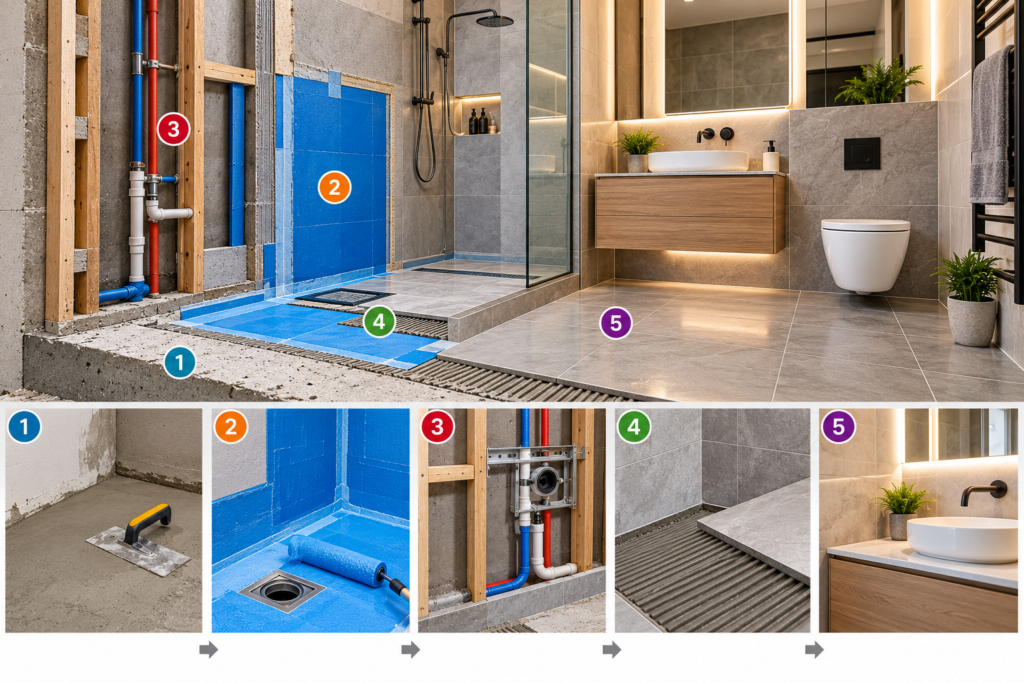
1. Waterproofing and preparation
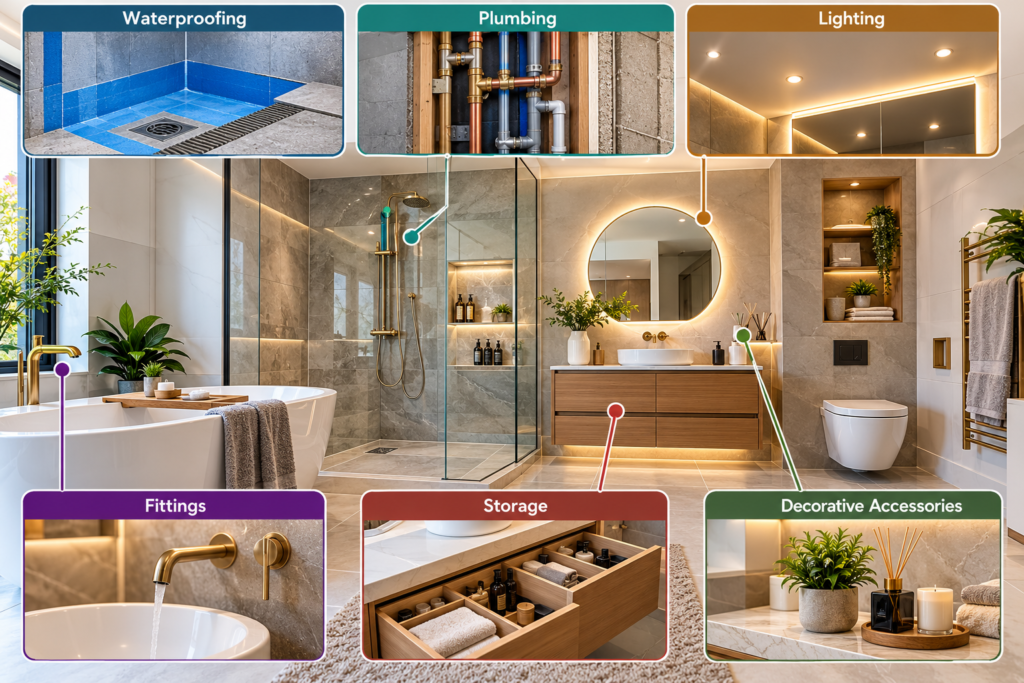
Waterproofing is not where a luxury bathroom should economise. Behind the tiles, the substrate, tanking or appropriate waterproofing system, falls, seals and junctions all contribute to the long-term performance of the room.
The same principle applies to floor preparation. If the floor is uneven or the walls are poorly prepared, even expensive tiles can look disappointing.
2. Plumbing and drainage
Moving a toilet, basin or shower can transform a bathroom, but relocating plumbing can also increase labour and project complexity. Before approving a new layout, establish where existing waste pipes, water supplies and structural elements are located.
For many projects, retaining sensible plumbing routes and spending the savings on better fittings produces a stronger overall result.
3. Frequently used fittings
Spend more on items you use every day: the shower valve, basin taps, toilet mechanism, shower hardware and, where appropriate, the vanity.
A reliable thermostatic shower system, for example, can provide better day-to-day control than choosing an expensive decorative fitting simply because it looks impressive.
Houzz’s 2025 UK Bathroom Trends Study found that 65% of surveyed renovators chose thermostatic mixers, while durability and easy cleaning were also important considerations when selecting bathroom materials.
Where Can You Save?
Saving money does not mean making the bathroom look cheap. It means identifying where a lower-cost decision will have little effect on performance or the finished appearance.
Choose feature tiles selectively
Instead of covering every wall with an expensive natural stone, consider using a premium material on one focal wall and a simpler complementary tile elsewhere.
Large-format porcelain can also create a sophisticated appearance while avoiding some of the maintenance considerations associated with certain natural stones.
Keep the existing layout when it works
If your toilet, basin and shower are already positioned sensibly, moving everything simply for visual change may not provide enough benefit to justify the additional plumbing and labour.
This is particularly relevant when planning small luxury bathrooms London homeowners want to make themselves feel spacious. Good design can often achieve more than expensive structural changes.
Save on accessories
You do not need a designer-priced towel rail, mirror frame, toilet-roll holder or decorative shelf to create a high-end atmosphere. Choose products with a coherent finish and good construction, then spend the larger part of the budget on infrastructure and high-use fittings.
High-End Features That Make a Difference
Luxury should improve how the bathroom feels and functions, not simply increase the price of the specification.
Lighting is one of the strongest examples. Layered lighting can combine general illumination, task lighting around the vanity and softer accent lighting. An illuminated, anti-fog mirror can also combine convenience with visual impact.
Storage deserves similar attention. A wall-hung vanity can make cleaning easier and create a more open visual effect, while bespoke storage can use awkward corners that standard furniture leaves unused.
The latest Houzz research supports this practical approach. In its 2025 UK bathroom study, 77% of respondents said easy cleaning was a priority, while 72% incorporated LED lighting and 42% chose water-efficient features.
How to Make a Small Bathroom Feel Luxurious
A small bathroom does not automatically need a small budget. In fact, compact spaces can benefit from careful design because every decision is visible.
Start with the layout. Avoid squeezing too many fixtures into the room. A well-proportioned walk-in shower, wall-hung vanity and carefully positioned WC may feel more luxurious than a larger selection of fittings competing for space.
Use visual continuity to your advantage. Similar tones across the walls and floor can reduce visual interruptions, while a large mirror can increase the feeling of openness.
The 2025 Houzz study found that 39% of renovated primary bathrooms were under 5 square metres, showing that compact bathrooms remain a significant part of the renovation market.
Common Budget Mistakes to Avoid
The biggest mistake is spending heavily on visible finishes before understanding what is underneath them.
Another common problem is accepting a quotation that does not clearly explain what is included. Removal, waste disposal, plumbing alterations, electrical work, waterproofing, preparation, tiling and final installation should be clearly understood before work begins.
It is also worth allowing contingency for unexpected conditions. Older London properties can reveal damaged substrates, outdated pipework or previous installation problems once the existing bathroom is removed.
For current UK guidance, Planning Portal states that a straightforward bathroom refit does not generally require Building Regulations approval, although drainage or electrical work may do so. Creating a bathroom in a room where one did not previously exist is more likely to require approval.
Safety, Ventilation and Building Regulations
Luxury design still has to work safely.
Bathrooms need effective ventilation because moisture can contribute to condensation and mould. Planning Portal notes that new bathrooms and shower rooms should have a means of extract ventilation, while current Approved Document F provides the relevant ventilation guidance for England.
Electrical work deserves particular care. Electrical Safety First advises using a registered electrician for bathroom electrical installation work and highlights specific requirements around RCD protection, electrical zones and socket locations.
Water supply, sanitation, hot-water safety and water efficiency are also covered by Approved Document G.
If the Wimbledon property is listed, additional restrictions may apply. The UK Government explains that listed building consent can be required where alterations affect the character of a listed building, including internal historic features.
A Practical Luxury Bathroom Budget Strategy
A sensible order of priority is simple: first protect the room, then make it function well, then improve the things you interact with every day, and finally add decorative luxury.
| Spend More On | Spend Carefully On |
|---|---|
| Waterproofing | Feature tiles |
| Plumbing and drainage | Decorative accessories |
| Electrical safety | Designer-style mirrors |
| Quality shower system | Premium wall finishes |
| Durable vanity | Decorative shelving |
| Ventilation | Non-essential styling |
Current UK cost guides show how widely bathroom renovation prices can vary. Checkatrade estimates a UK bathroom remodel at around £4,500 on average, while complex high-end projects can reach £14,000 or more. Labour, plumbing alterations, materials and project complexity can all move the final figure considerably.
The important lesson is not to copy an average figure. Instead, create a specification based on your property’s condition, room size, layout and desired finish.
CG Bathrooms Limited approaches Wimbledon renovation projects with an emphasis on workmanship, premium materials and transparent pricing, which can be particularly useful when several parts of a renovation need coordinating.
Key Takeaways
The most expensive bathroom is not automatically the most luxurious. A genuinely high-end result comes from investing in the hidden work, selecting reliable high-use fittings and using premium finishes strategically.
If the layout works, keep it. If the waterproofing needs improvement, prioritise it. If the room is small, spend on intelligent planning rather than simply adding more expensive products.
For homeowners considering high end bathroom renovations on Wimbledon properties, the goal should be a bathroom that looks refined today but remains practical, durable and easy to maintain for years.
What would you prioritise in your Wimbledon bathroom renovation: a better layout, premium fittings, statement materials or hidden improvements such as waterproofing and plumbing—and would you like help working out where your budget would make the biggest difference?
Frequently Asked Questions
1. What makes a bathroom renovation high-end?
A high-end bathroom is defined by the quality of planning, installation, materials, functionality and finishing rather than by price alone. Good waterproofing, precise installation, durable fittings, effective lighting and thoughtful storage can make a bathroom feel luxurious without making every item the most expensive option.
2. What should I spend the most money on in a bathroom renovation?
Prioritise work that is difficult to replace later, including waterproofing, plumbing, drainage, electrical safety and proper preparation. After that, invest in high-use fittings such as the shower, taps, vanity and toilet.
3. Can I create a luxury bathroom on a smaller budget?
Yes. Keeping a sensible existing layout and using premium materials selectively can create a high-end appearance without paying for unnecessary structural changes. Lighting, mirrors, storage and carefully chosen feature finishes can also have a strong visual impact.
4. Are large-format tiles better for a luxury bathroom?
Large-format tiles can create a clean, contemporary appearance with fewer grout lines, but they are not automatically better for every room. The suitability depends on the wall and floor condition, room dimensions, tile material and installer skill.
5. Is it worth moving the toilet or shower?
It can be worthwhile when the existing layout is genuinely inefficient, but moving plumbing can increase labour and project costs. A professional assessment should establish whether the improvement justifies the additional work.
6. How can I make a small bathroom look more luxurious?
Keep the layout visually simple, use consistent colours and finishes, maximise storage and consider wall-hung furniture where suitable. Good lighting and a large mirror can also make a compact room feel more open.
7. Do bathroom renovations need Building Regulations approval?
A simple refit does not generally require Building Regulations approval, but electrical or drainage work may have regulatory requirements. Creating a bathroom where one did not previously exist can also require approval, so the specific project should be checked before work starts.
8. Does a luxury bathroom need mechanical ventilation?
Ventilation is important for controlling moisture and condensation. Current English guidance covers ventilation requirements for bathrooms, and any new or replacement extract system should be designed and installed appropriately.
9. What should I check in a bathroom renovation quotation?
Check that the quotation clearly identifies demolition, waste removal, plumbing, electrical work, waterproofing, preparation, tiling, fixtures, installation, finishing, warranties and exclusions. Comparing itemised quotations is more useful than comparing only the final price.
10. Should I choose expensive bathroom fittings or premium materials?
Choose based on use rather than price alone. Spending more on frequently used or difficult-to-replace components usually provides more lasting value than spending heavily on decorative items that have little effect on performance.