
How to Choose Colour Schemes for Small Bathroom Renovations in London
Choosing the right colour scheme is one of the most effective ways to transform a compact bathroom — especially in London, where space is a luxury and many homes have narrow, awkward, or older bathroom layouts. The colours you decide on can make the room feel brighter, more open, and more inviting without changing the physical size of the space.
Whether you’re upgrading a flat in Fulham, modernising a Victorian terrace, or refreshing a city apartment, this guide walks you through how to choose a colour palette that enhances space and ambience — all tailored for small bathroom renovations in London.
Why Colour Matters More in Small London Bathrooms
Research from the Houzz UK Bathroom Trends Study, Rated People Home Improvement Report, and UK Colour & Design Association all point to the same thing: colour choices significantly affect how large and functional a small bathroom feels.
A few key insights:
- 57% of homeowners say colour is the biggest factor influencing the “feel” of the bathroom.
- Lighter colours can increase the perception of space by up to 20–30%.
- Natural light levels in the average London bathroom are lower than most UK regions due to older architecture and building layouts.
With so much visual impact riding on colour alone, choosing the right tones for your small bathroom renovation in London becomes essential.
Start With the Light Your Bathroom Gets
Before picking any colours, understand your lighting conditions.
London properties vary hugely — some bathrooms have skylights, some have small sash windows, and many have no window at all.
Low or No Natural Light
If your bathroom is internal or poorly lit:
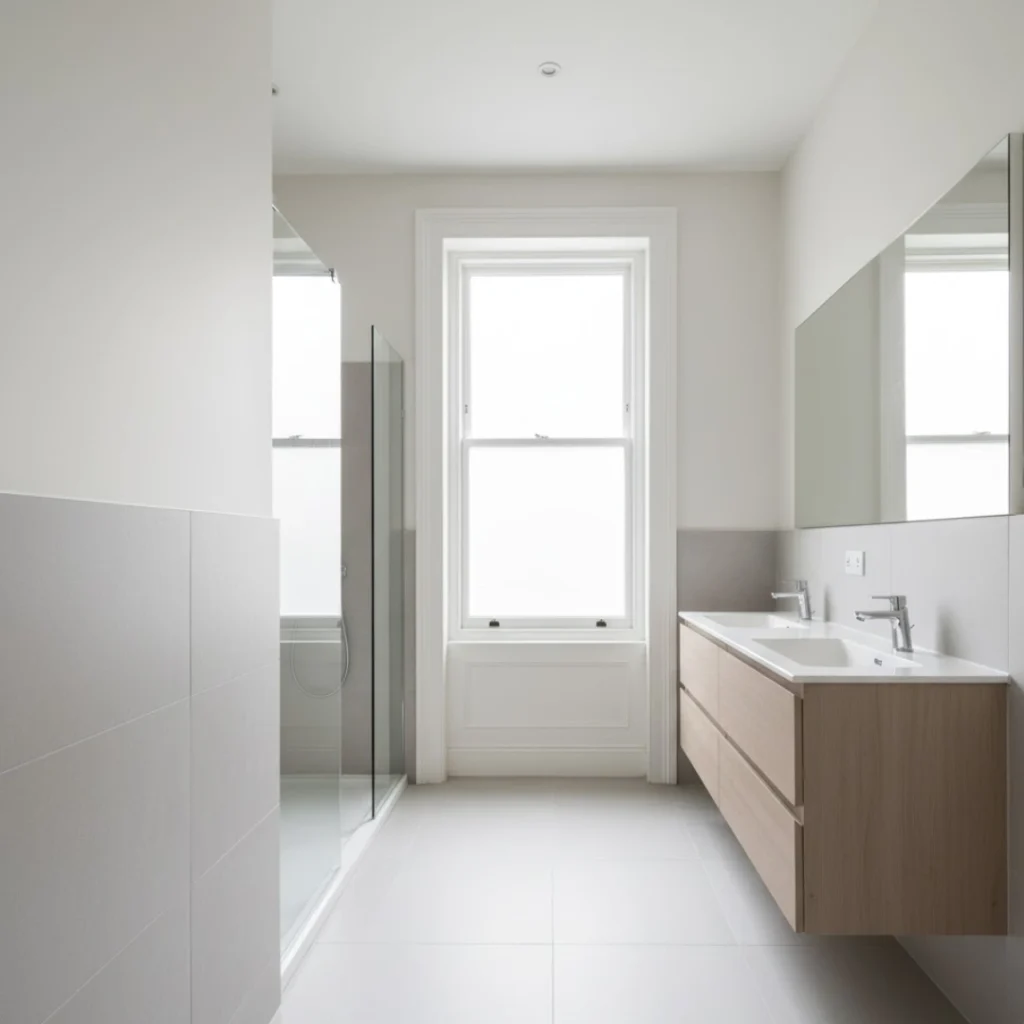
- Use warm-toned whites
- Soft greys
- Pale beige or oatmeal tones
These colours reflect light well and prevent the room from feeling dull.
Good Natural Light
If you’re lucky enough to have a window:
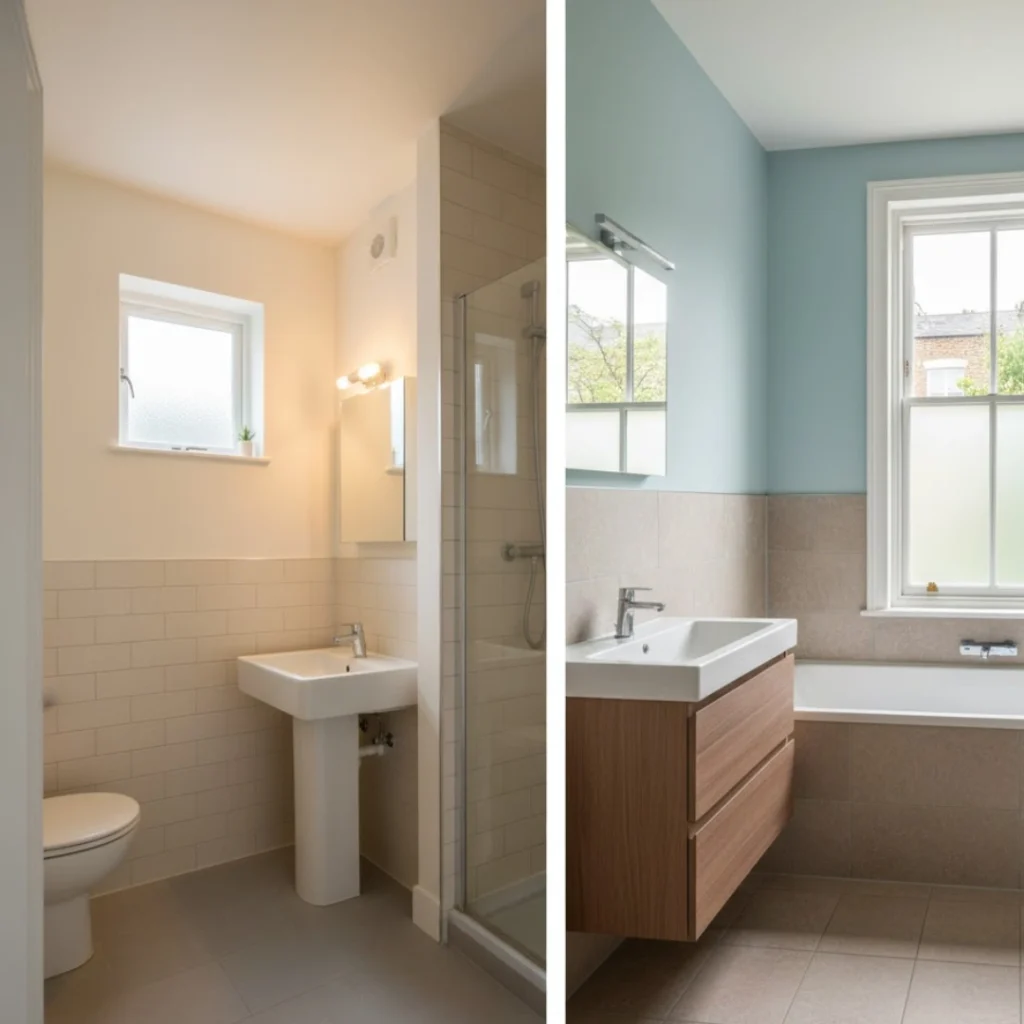
- Light blues
- Soft greens
- Neutral stone colours
- Clay-toned neutrals
These tones stay consistent throughout the day and won’t overpower small rooms.
According to the Society of Light and Lighting (SLL), reflective colours in compact spaces improve perceived brightness by up to 25%, making cramped rooms feel larger and fresher.
Best Colour Schemes for Small Bathroom Renovations in London
Below are the most effective, space-enhancing colour schemes backed by UK design trends and renovation reports — perfectly suited for London’s smaller bathrooms and Fulham’s modern refurb styles.
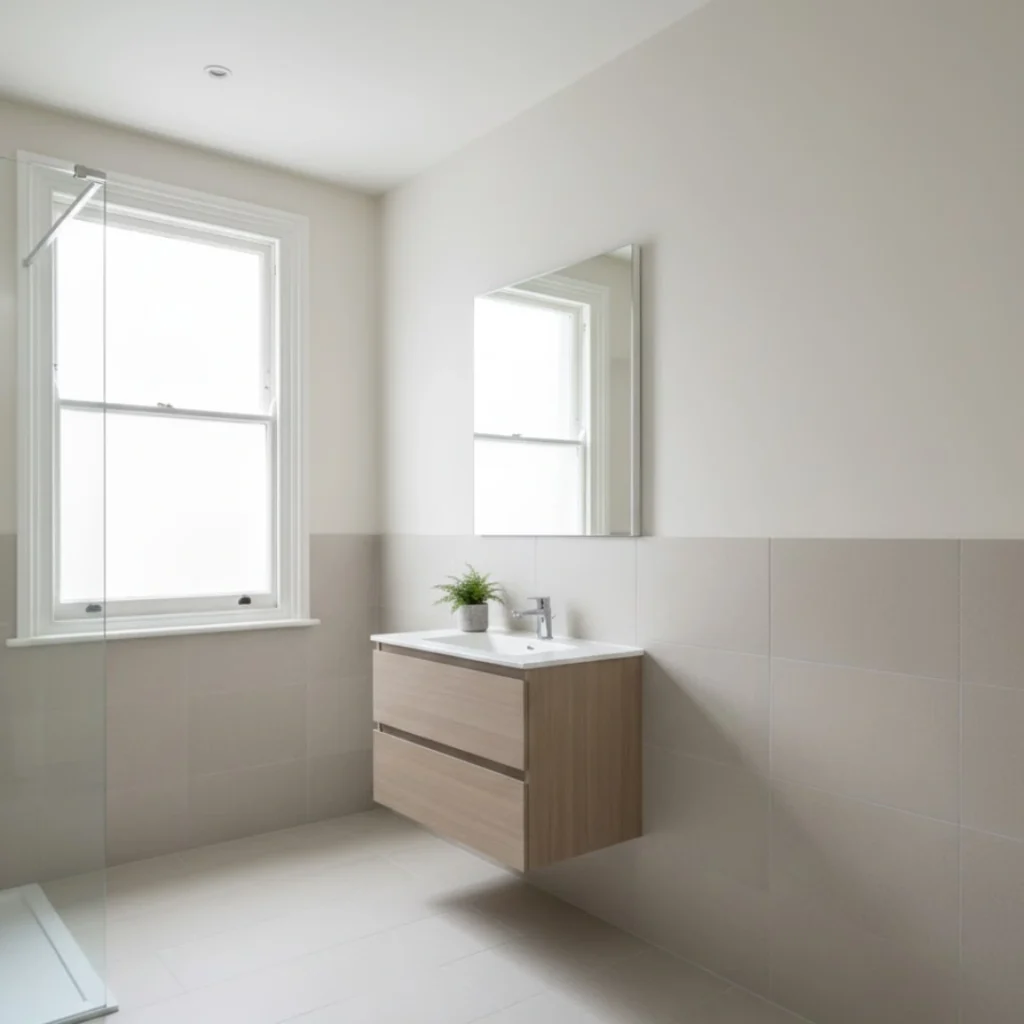
1. Soft Whites & Neutral Tones (Timeless and Space-Opening)
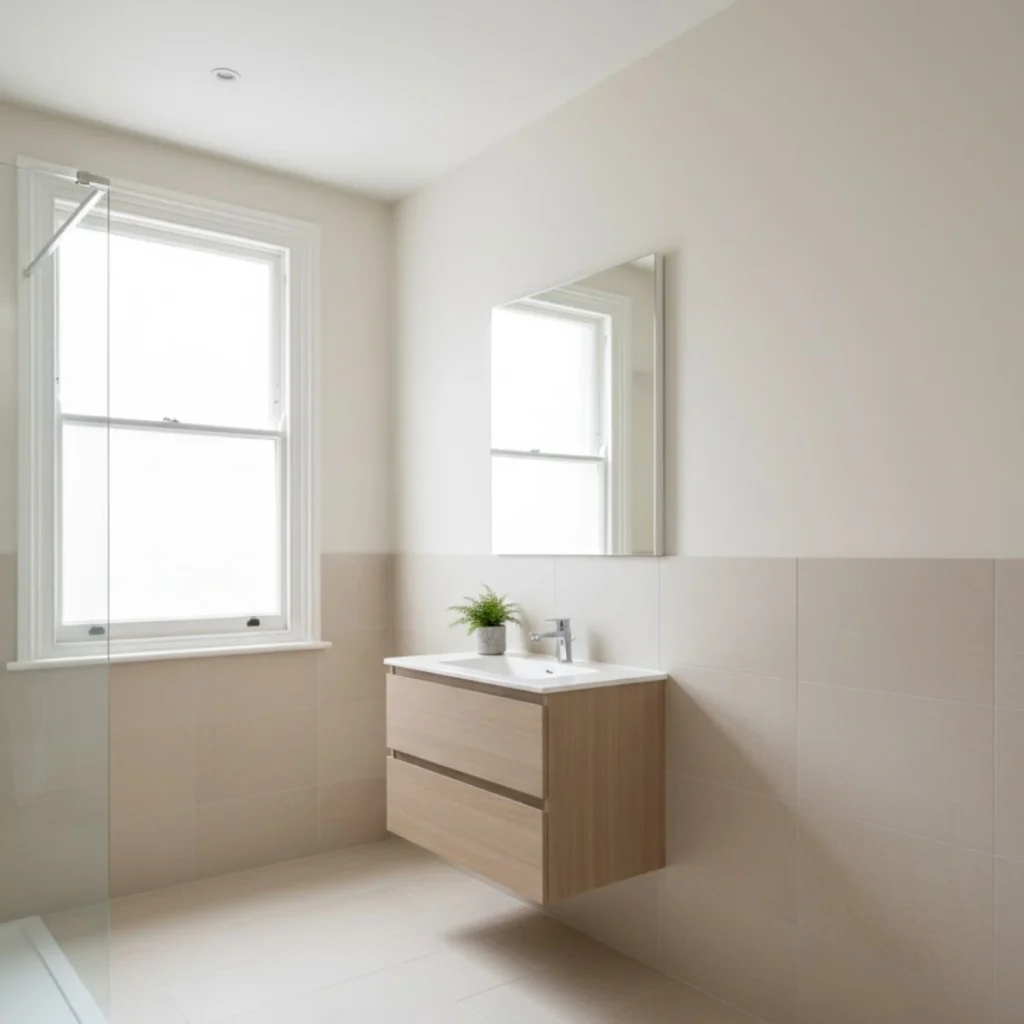
Soft whites and warm neutrals are consistently the top choices in small UK bathrooms because of their ability to brighten tight spaces.
Why they work:
- Increase light reflection
- Make low-ceiling rooms feel taller
- Create an airy, uncluttered look
Shades like linen white, pearl, or almond are widely recommended for city bathrooms and are extremely popular in bathroom renovation Fulham projects.
2. Light Greys & Stone Shades (Modern but Soft)
Grey continues to dominate UK bathroom trends due to its minimalist and versatile feel — but for small spaces, light greys work best.
Choose:
- Dove grey
- Misty stone
- Soft ash tones
These colours feel modern without making the room look cold, which is ideal for older London homes with smaller layouts.
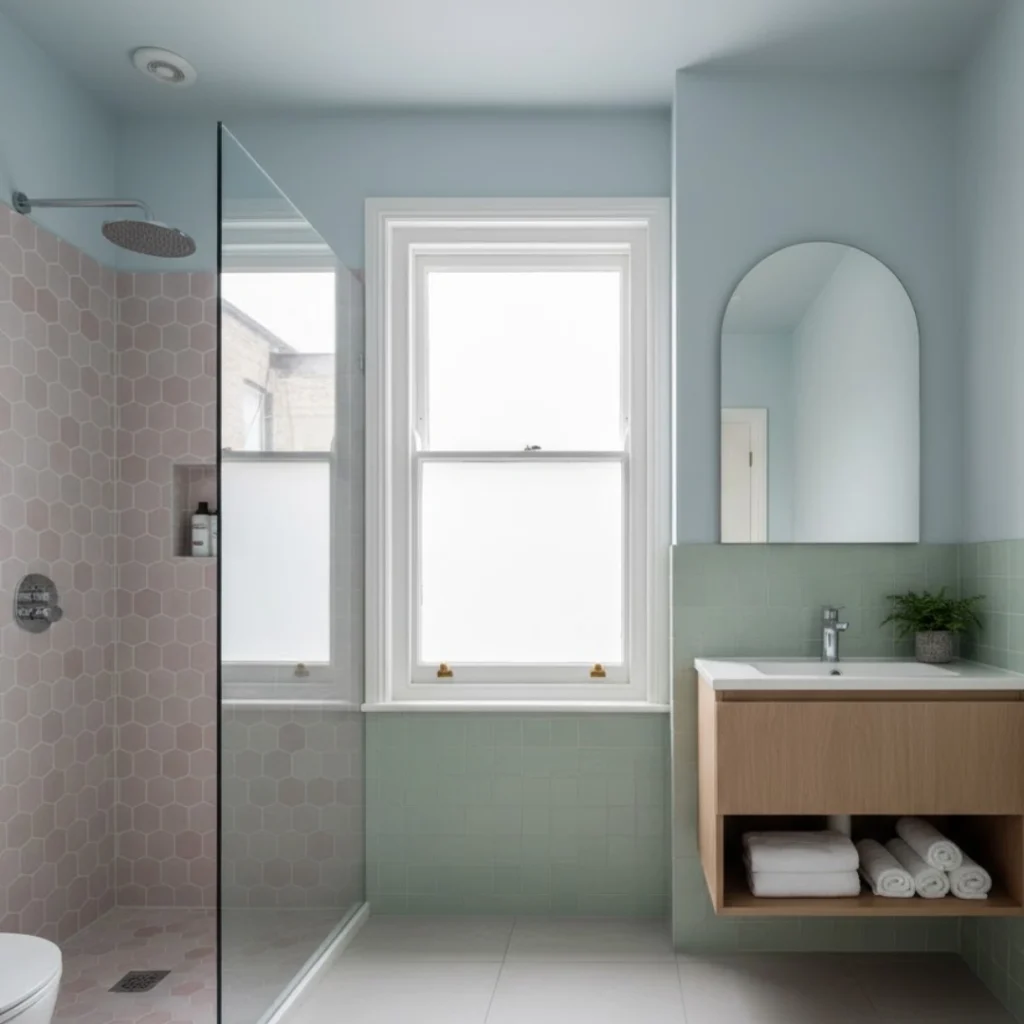
3. Pastel Tones (Bright but Not Overwhelming)
Pastels have made a strong comeback in London renovations because they add personality without shrinking the space.
Popular palettes include:
- Soft sage
- Powder blue
- Blush neutral
- Lavender-grey
UK colour psychology research shows that muted pastels help create a more open and calming environment.
4. Blue and White Combinations (Brightening Effect)
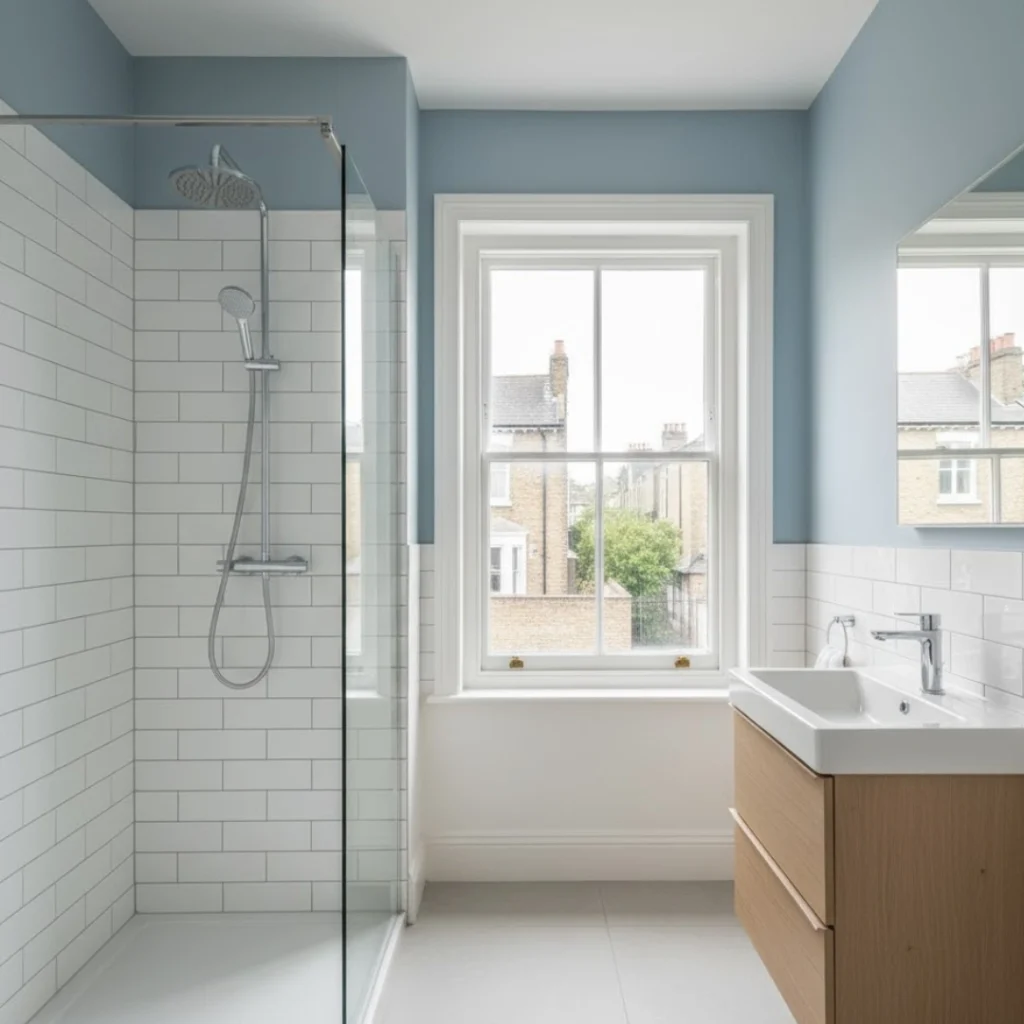
Soft blues paired with crisp whites work brilliantly in small bathrooms, especially those lacking natural light.
This palette:
- Creates a clean visual contrast
- Adds depth without clutter
- Works well with modern or traditional fittings
It’s a frequent choice for bathroom renovation in Fulham, homeowners looking to brighten older properties.
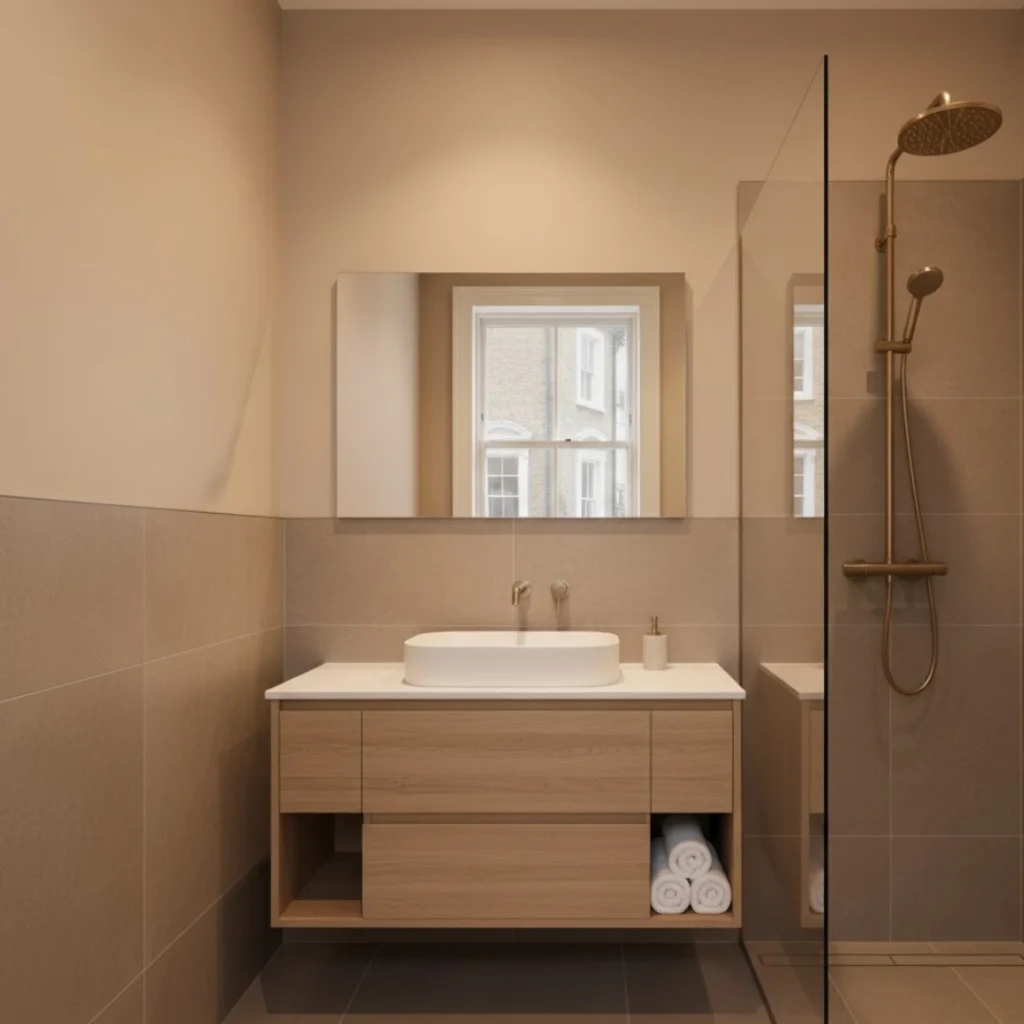
5. Beige, Sand & Natural Tones (Warm and Space-Enhancing)
Warm earthy tones are trending across London because they add softness and warmth to confined spaces.
Use these shades if you want:
- A cosy, spa-like feel
- A colour scheme that hides daily wear
- A palette that works with chrome or warmer fixtures
Stone beige, mushroom, and taupe shades are strong picks for London homes.
Choosing Tile Colours That Enhance a Small Bathroom
The tile colours you choose can make or break the look of a small bathroom.
Light Tiles = Larger Feel
Larger tiles in lighter tones reduce visual breaks in the room, which enhances flow and makes the space feel bigger.
Gloss Tiles Reflect More Light
A popular recommendation in London renovations, especially in windowless bathrooms.
Matt Tiles Work Well in Neutral Tones
Great for creating a clean, modern look in compact bathrooms without the glare of glossy finishes.
According to several UK tile suppliers, light-coloured tiles with minimal grout lines are the most popular choice for small bathroom refurbishments.
Accent Colours — Use Them Smartly
Small bathrooms can easily feel crowded if you overuse colour. The key is adding accents sparingly.
The safest accent areas:
- Vanity unit
- Mirror frame
- Tap finishes
- Towel rail
- Accessories
Accent colours like black, navy, brushed brass, or earthy tones add style without overwhelming the space.
Matching Colour Schemes to Common London Bathroom Layouts
London bathrooms vary a lot — here’s what works best for the most common layouts.
Narrow Bathrooms
- Stick to light colours
- Use one continuous tile colour on walls
- Keep contrasts minimal
Box-Shaped Bathrooms
- Pale walls + slightly darker floors
- One darker accent tile for balance
Loft or Eaves Bathrooms
- Neutral colours for angled ceilings
- Lighter tones to keep the space open
These combinations are widely used in bathroom renovation Fulham projects due to the modern property styles there.
Colour Temperature Matters More Than Most People Realise
Light temperature dramatically changes how colours look.
Recommended lighting temperature for small London bathrooms:
- Warm white (2700K–3000K) = cosy, natural
- Neutral white (3500K–4000K) = modern, clean
Cool light (5000K+) often makes small bathrooms look harsh.
This is based on guidance from the SLL Lighting Handbook, which details how colour temperature interacts with reflective surfaces.
Make Colour Work for Your London Bathroom
Choosing the ideal colour scheme for a small bathroom renovation London project isn’t about following trends — it’s about understanding how colour interacts with light, space, and layout. The right palette enhances brightness, creates a sense of openness, and adds long-lasting value to your home.
Whether you’re refreshing a compact space or upgrading a property in Fulham, thoughtful colour choices can make your bathroom feel bigger, more comfortable, and beautifully finished — without any structural changes.
For homeowners planning a bathroom renovation in Fulham or anywhere across London, CG Bathrooms Limited provides quality workmanship that brings your chosen colours and materials together seamlessly so your bathroom looks clean, modern, and professionally finished.
Frequently Asked Questions (FAQs)
1. What are the best colours for a small bathroom renovation in London?
For a small bathroom renovation in London, the best colours are soft whites, light greys, warm neutrals, and pale pastels. These shades reflect light well and help make compact London bathrooms feel bigger and brighter, especially in properties with limited natural light.
2. How do I choose a colour scheme for a small bathroom?
Start by assessing how much natural light the bathroom gets. In low-light spaces, warm whites and light neutrals work best. If your bathroom has a window, soft blues, muted greens, or stone tones can add depth without shrinking the room. Limit your palette to 2–3 colours to keep the space cohesive.
3. What colours make a small bathroom look bigger?
Lighter tones like pearl white, dove grey, powder blue, and soft beige create an open, airy feel that visually enlarges the space. Large, light-coloured tiles also reduce visual breaks, enhancing the effect.
4. Are darker colours suitable for small bathrooms?
Darker colours can work, but only as accents. Using deep greys, navy, or black sparingly — for example on fixtures or accessories — adds style without making the room feel smaller or boxed in.
5. What colour tiles are recommended for small bathrooms in London homes?
Light-coloured tiles such as ivory, pale grey, or stone beige are ideal. Gloss tiles help reflect more light in small, windowless London bathrooms, while matt tiles in neutral tones create a modern and soft finish.
6. Should I choose different colours for a bathroom renovation in Fulham?
If you’re planning a bathroom renovation in Fulham, popular local trends include warm neutrals, sage greens, stone greys, and soft blues. These colours suit both modern apartments and traditional terraced homes found in Fulham.
7. How many colours should I use in a small bathroom?
It’s best to limit your scheme to two or three main colours. Too many tones can make the room feel cluttered, which reduces the sense of space.
8. Do lighting conditions affect bathroom colour choices?
Yes. Lighting plays a huge role. Warm white lighting (2700K–3000K) works well with neutrals and soft tones, while neutral white lighting (3500K–4000K) suits contemporary spaces. Cool light often makes small bathrooms appear harsh.
9. Should the floor and walls match in a small bathroom?
Matching or closely coordinating floor and wall colours creates a seamless look that visually enlarges the space. Large-format light tiles are especially effective for small bathrooms.
10. Are pastel colours good for small bathroom renovations?
Absolutely. Soft pastels like sage, blush, and powder blue brighten compact spaces without overwhelming them, making them ideal for London bathroom refurbishments.