
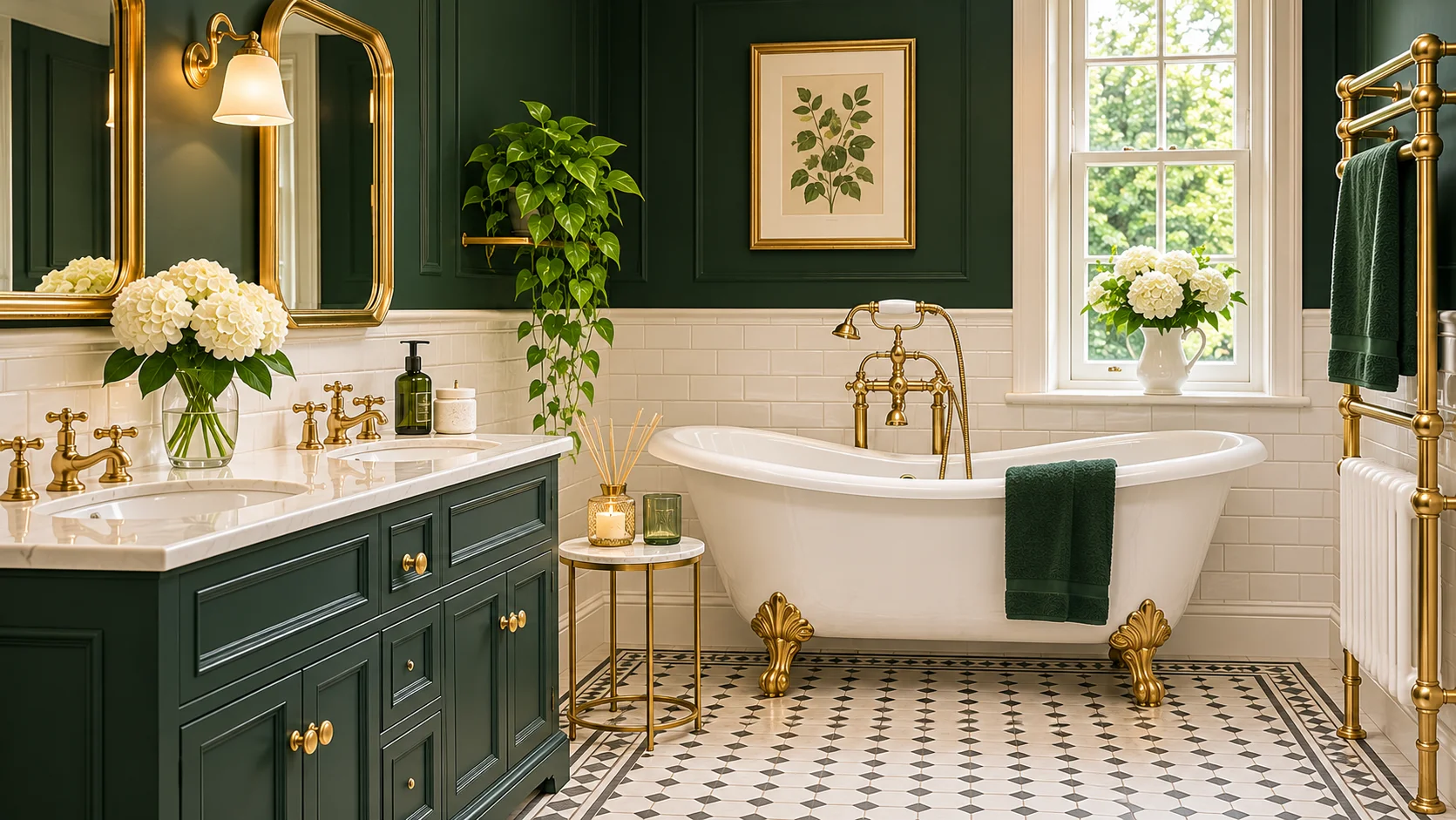
Traditional Style Bathroom in Kensington: 8 Details That Never Go Out of Style
A traditional style bathroom Kensington homeowners can enjoy for years combines classic beauty with modern comfort. From elegant roll-top baths to patterned floor tiles, the right details create a welcoming space without relying on short-lived trends.
Whether you live in a period townhouse or a modern London apartment, traditional bathroom design can suit your home. The key is to balance decorative features with practical storage, good lighting and materials that can handle daily moisture.
Why Traditional Bathrooms Never Go Out of Style
Traditional bathrooms take inspiration from Victorian, Edwardian and other classic interiors. They often feature familiar shapes, natural-looking materials, detailed fittings and balanced layouts.
Unlike designs built around a single fashion trend, traditional interiors can adapt over time. You can update the wall colour, lighting or accessories without replacing every fixture.
For Kensington homes, this approach can also complement period architecture. However, the best design depends on your room size, existing features and daily needs.
8 Timeless Details for a Traditional Style Bathroom in Kensington
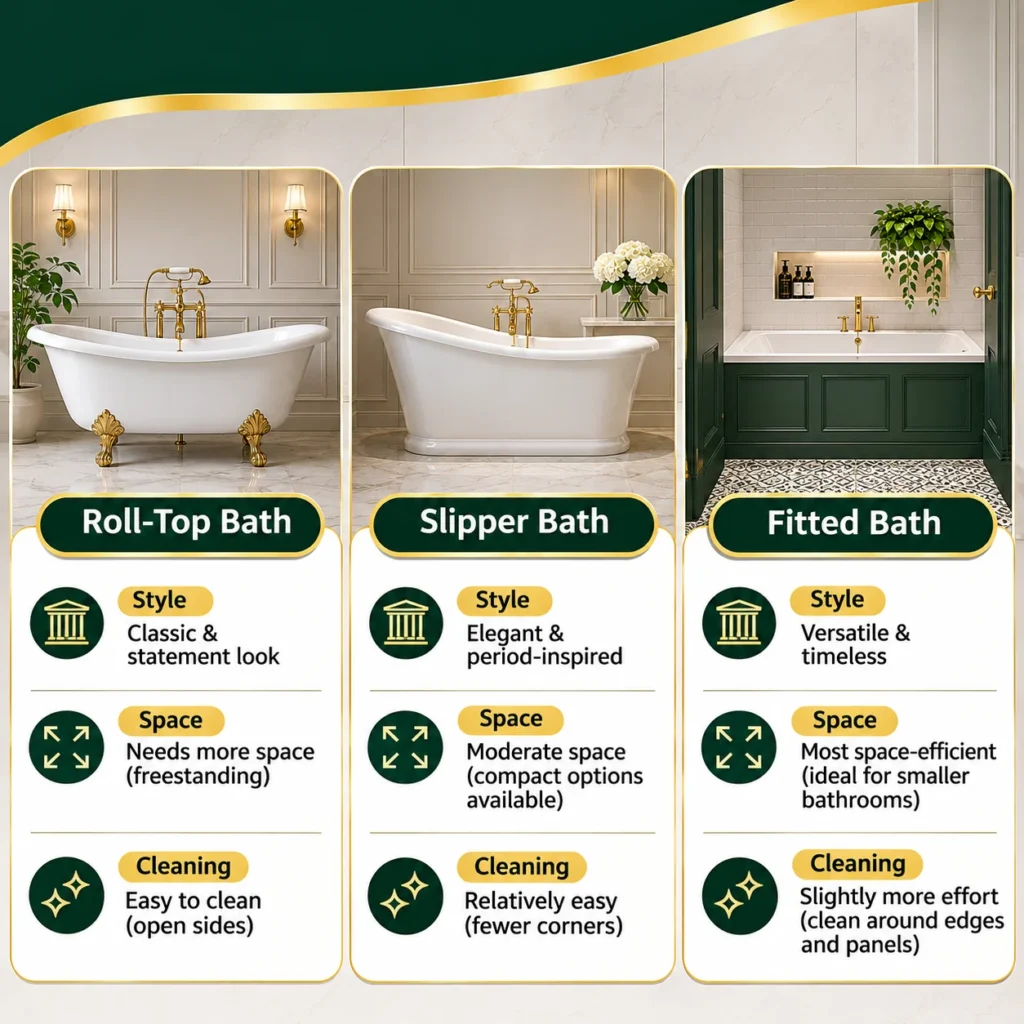
1. A Roll-Top or Freestanding Bath
A freestanding bath can become the main feature of a traditional bathroom. A white roll-top or slipper bath creates a classic look, especially when paired with traditional taps and simple wall finishes.
Before choosing one, measure the available floor space, doorways and access route. A freestanding bath needs room for cleaning around it, while its filled weight must be suitable for the floor structure.
Practical tip: If your bathroom is small, consider a compact freestanding bath or a traditional-shaped fitted bath. You can achieve the same classic feel without making the room difficult to use.
2. Classic Wall and Floor Tiles
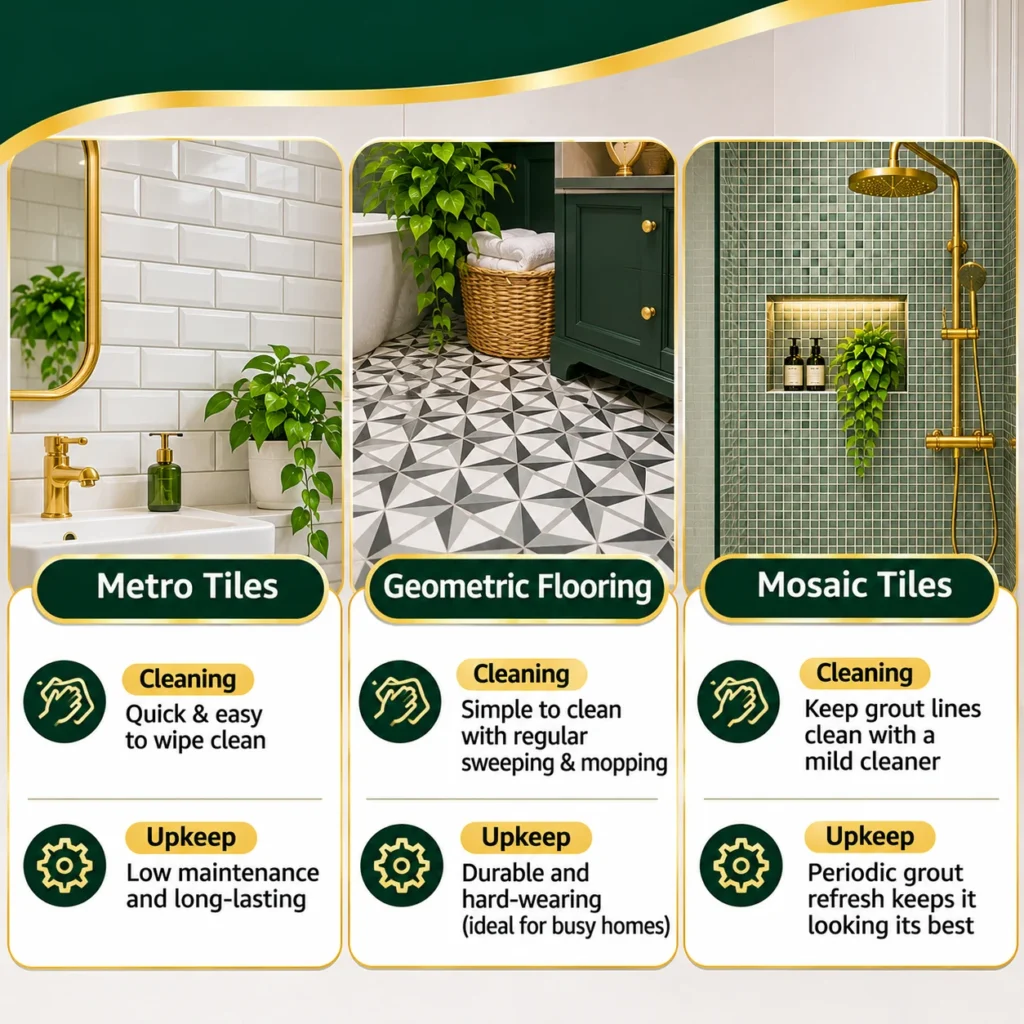
Metro tiles, black-and-white geometric patterns and small mosaic floors work well in traditional interiors. White wall tiles can make a compact room feel brighter, while patterned flooring adds character without needing expensive decoration everywhere.
For a balanced finish, pair patterned floors with simpler walls. Choose slip-resistant flooring suitable for wet areas, and ask your installer to confirm that the tiles, adhesive and grout are appropriate for the surface and moisture levels.
Practical tip: Use decorative tiles in one area, such as the floor or behind the basin, rather than covering every surface with competing patterns.
3. Traditional Taps and Metal Finishes
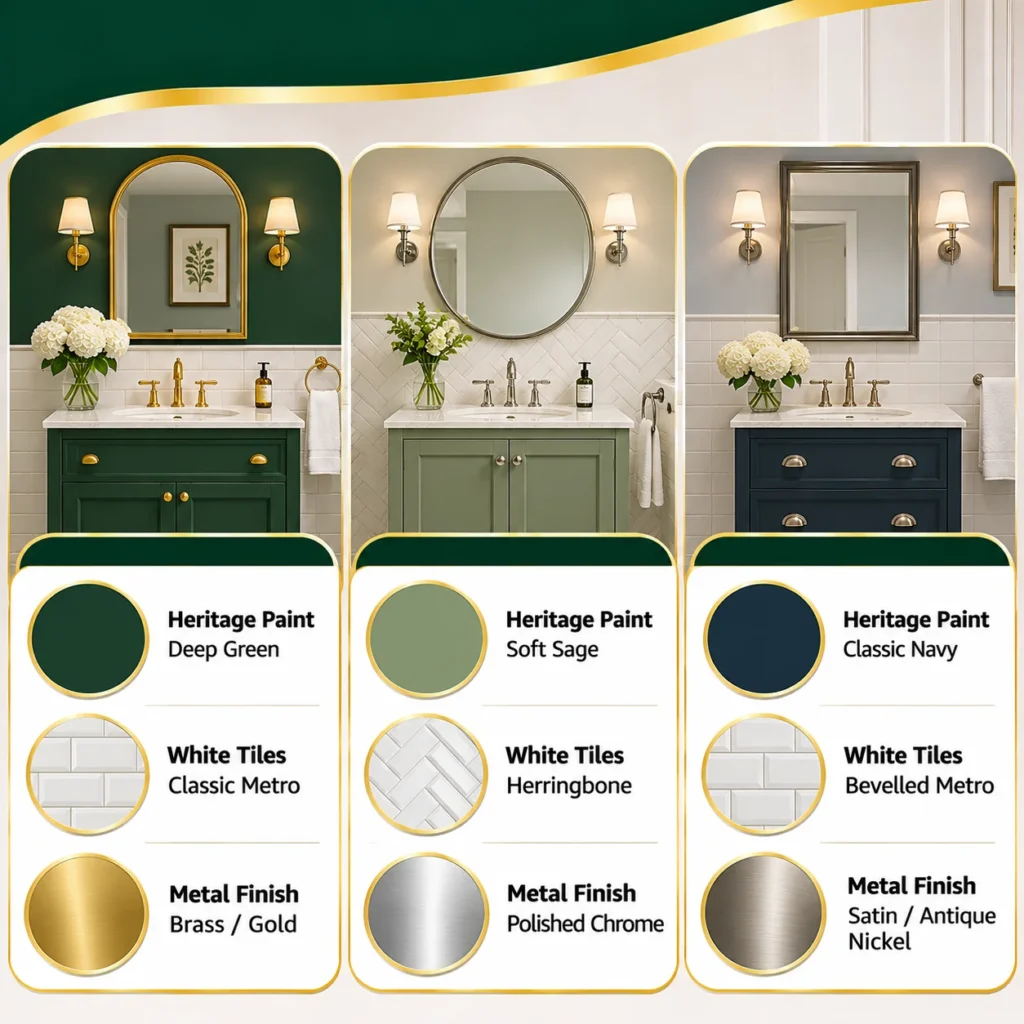
Crosshead taps, ceramic details and curved spouts can give a basin or bath an unmistakably traditional appearance. Polished chrome offers a bright, classic finish, while brass adds warmth.
The important detail is consistency. Select a main metal finish for taps, shower controls, towel rails and visible accessories. You do not need every item to match exactly, but unrelated finishes can make the room feel less coordinated.
Check water pressure and compatibility before purchasing taps. Some traditional-looking fittings require particular plumbing arrangements, and replacement parts should be available if you want to keep them for years.
4. A Classic Vanity Unit and Basin
A pedestal basin creates an open, period-inspired appearance. A painted vanity unit with framed doors and traditional handles offers more storage for toiletries, towels and cleaning products.
The right choice depends on your household. A pedestal basin may suit a guest bathroom, but a vanity unit is often more practical for a family bathroom.
Measure the space needed to open cupboard doors and drawers. If the room is narrow, wall-mounted storage or a slim vanity can preserve useful floor space.
5. Elegant Panelling and Decorative Walls
Wall panelling, decorative mouldings and restrained heritage colours can add depth without making the bathroom look old-fashioned. Soft white, sage green, muted blue and warm cream work well with traditional fittings.
However, ordinary timber panelling is not automatically suitable for damp areas. Use bathroom-appropriate materials and finishes, seal exposed edges properly, and follow the manufacturer’s installation instructions.
In a smaller Kensington bathroom, half-height panelling with a lighter upper wall can provide character while keeping the room visually open.
6. Period-Inspired Lighting
Good lighting makes decorative details easier to appreciate and helps with everyday tasks. Wall lights, enclosed ceiling fittings and traditional-style mirror lights can complement a classic bathroom.
Aim for layered lighting: general illumination for the whole room and suitable task lighting around the basin. Choose fittings designed for their intended bathroom location, with the correct protection against moisture.
Electrical Safety First advises using a registered electrician for bathroom electrical work. In England, applicable work must also meet Building Regulations requirements, including Part P where relevant.
7. Mirrors, Towel Rails and Finishing Touches
A framed mirror, classic towel rail and carefully chosen handles can complete the room without a major renovation. These smaller details are often easier to change later than baths, tiles or plumbing.
Choose a mirror that suits the basin’s width and leaves enough space for taps and wall lights. A heated towel rail can provide a practical place to dry towels, but check its heat output and installation requirements before selecting a model.
Avoid filling every surface with ornaments. A few useful accessories usually create a calmer, more timeless result.
8. Hidden Modern Comforts
A traditional bathroom does not need to sacrifice modern convenience. Concealed storage, an efficient extractor fan, a thermostatic shower and well-planned lighting can sit comfortably behind a classic design.
Waterproofing is especially important around showers, baths and tiled wet areas. Ask your installer how the substrate will be prepared, how joints will be sealed and how leaks will be prevented.
Ventilation matters too. The UK government’s Approved Document F provides guidance on ventilation requirements for applicable building work. Effective extraction helps control moisture and condensation, protecting finishes over time.
Choosing Colours and Materials That Work Together
A traditional bathroom looks best when its finishes feel connected rather than competing for attention.
Design choice | Suitable combination |
Light and airy | White metro tiles, cream walls and chrome |
Warm and welcoming | Ivory sanitaryware, muted beige and brass |
Rich and classic | Deep green, white ceramics and polished chrome |
Period-inspired | Geometric flooring, painted panelling and traditional taps |
Choose materials based on maintenance as well as appearance. Natural stone can look beautiful but may need sealing and specialist care. Porcelain and ceramic tiles offer many traditional designs and are often easier to maintain.
What Does a Traditional Bathroom Remodel Cost in London?
The price depends on room size, fitting quality, plumbing changes and the amount of preparation required. A straightforward replacement using the existing layout will usually cost less than a full refurbishment with premium tiles, bespoke cabinetry or structural work.
As an indicative benchmark, a London bathroom cost guide updated in October 2026 reports a median of approximately £12,500–£14,100 for a standard renovation. Premium projects can cost substantially more. These figures are market estimates, not a guaranteed price for a Kensington property.
Before accepting a quotation, check whether it includes removal of the old suite, waste disposal, plumbing, electrical work, waterproofing, tiling, decoration and VAT. Ask how unforeseen problems will be priced.
A useful way to control spending is to retain the existing layout where practical, invest in durable fittings and use decorative tiles selectively. Set aside a contingency for unexpected pipework or damaged flooring.
Planning a Traditional Bathroom Remodel London Homeowners Can Enjoy
A successful traditional bathroom remodel London project starts with the room itself, not a catalogue. Measure the space, note the location of existing pipes and windows, and decide which features matter most to you.
If your Kensington home is listed, check the property’s status before work begins. The Royal Borough of Kensington and Chelsea explains that many alterations affecting a listed building require listed building consent, including some internal changes. Its listed-building guidance is a sensible starting point.
Historic England also advises protecting significant historic features and taking care when installing new pipes or equipment. Avoid cutting into historic timber or plasterwork without suitable professional advice.
Practical Maintenance Tips
Classic fittings can last for years when cared for properly. Wipe taps and shower screens after use, clean grout with products suitable for its material, and check silicone seals regularly for cracks or gaps.
Use gentle cleaners on plated brassware and natural stone. Abrasive products can damage finishes, while persistent leaks or mould may point to a problem that cleaning alone will not solve.
Keep ventilation working and investigate recurring condensation. Repairing a small leak early can help prevent damage to cabinets, flooring and neighbouring rooms.
Which detail would you choose for your Kensington bathroom first: a classic freestanding bath, patterned Victorian tiles or elegant brass fittings? If you’re planning a renovation, have you decided which features matter most to you?
Frequently Asked Questions
1. What makes a bathroom look traditional?
Traditional bathrooms often feature freestanding baths, pedestal basins, crosshead taps, framed mirrors and classic tile patterns. Using a few well-matched details usually looks more balanced than adding every period feature at once.
2. Can a small Kensington bathroom have a traditional design?
Yes, a small bathroom can look traditional without feeling crowded. Choose lighter colours, compact fittings, a slim vanity and a simple tile pattern to preserve usable space.
3. Which tiles are best for a traditional bathroom?
Metro wall tiles and geometric or mosaic floor tiles are popular choices. Select flooring rated for the intended wet environment and make sure the installation system suits the substrate.
4. Are freestanding baths practical for everyday use?
They can be practical if the room has enough space for access and cleaning. Check the filled weight, floor suitability, tap position and maintenance requirements before buying one.
5. How much does a traditional bathroom remodel cost in London?
Costs vary with the room, materials and amount of building work involved. A standard London renovation may fall around the low-to-mid five figures, while premium projects can exceed £25,000; obtain itemised quotations for a reliable estimate.
6. Can I renovate a small bathroom without moving the plumbing?
A straightforward full refurbishment may take around two to four weeks on site, although complex work can take longer. Material availability, hidden damage, plumbing changes and approval requirements can affect the schedule.
7. Which colours suit a traditional bathroom?
Cream, white, sage green, muted blue and deep heritage shades all work well. Consider natural light, tile colour and metal finishes together before committing to a palette.
8. Can I combine traditional design with a modern shower?
Yes, a modern shower can fit naturally into a traditional bathroom. Choose classic-style controls or a simple glass screen, and ensure waterproofing and ventilation are properly planned.
9. Do I need permission to renovate a bathroom in a listed Kensington property?
You may need listed building consent if the work affects the building’s historic character or fabric. Check with the Royal Borough of Kensington and Chelsea before starting, particularly if you plan to alter walls, historic fittings or ventilation routes.
10. How can I make a traditional bathroom easier to maintain?
Choose durable surfaces, accessible storage and fittings with readily available replacement parts. Regular ventilation, gentle cleaning and prompt attention to leaks will help protect the bathroom over time.