
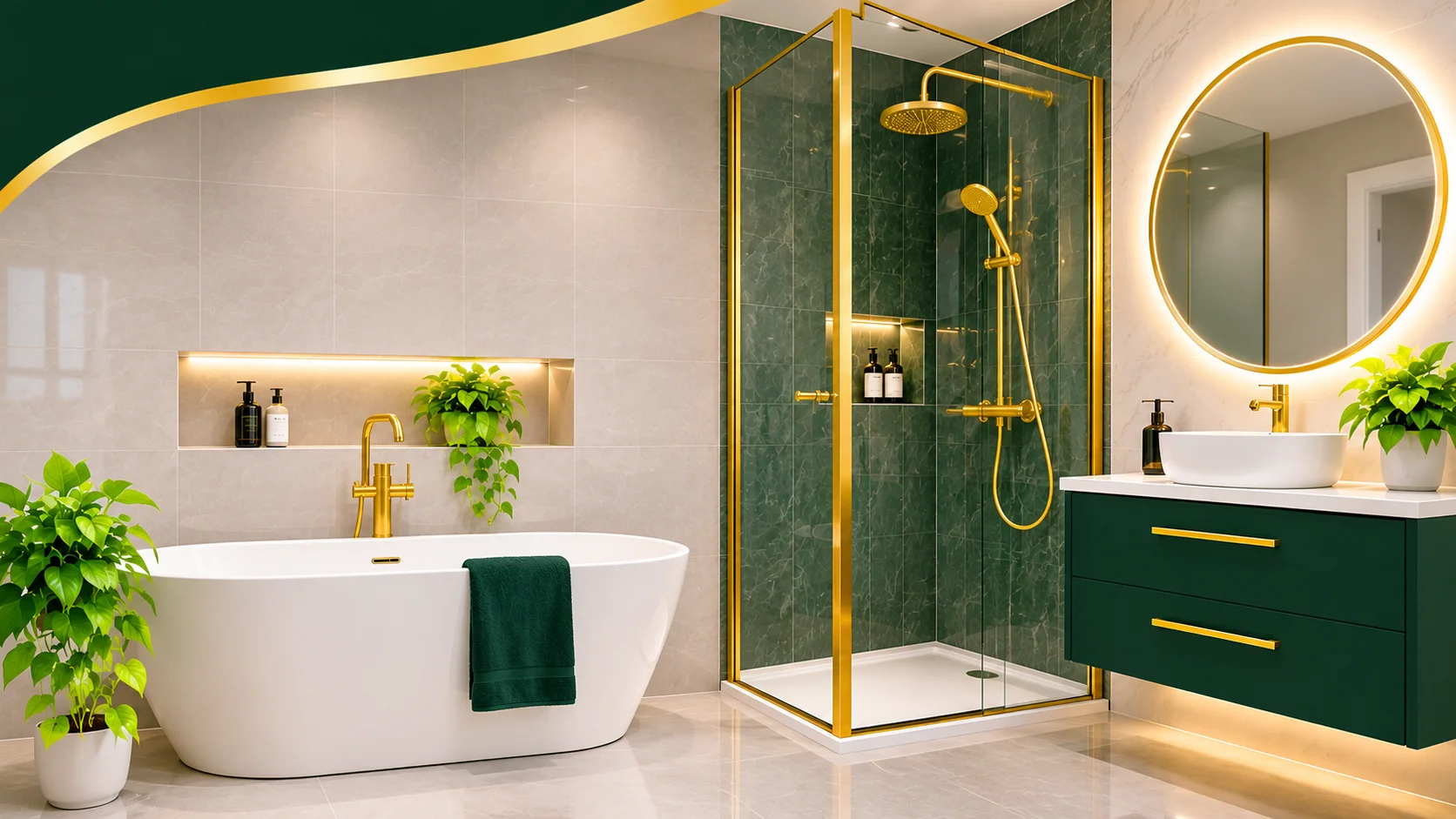
New Bath, Shower or Both? Plan Your Bathroom Installation in Fulham
Planning a bathroom installation Fulham project starts with one important question: do you need a new bath, a shower, or both? The right choice depends on your available space, daily routine, household needs and budget. A well-planned bathroom can make everyday tasks easier without wasting valuable floor space or money.
Whether you are updating a compact flat or renovating a family bathroom, understanding your options before buying fixtures will help you avoid costly changes later.
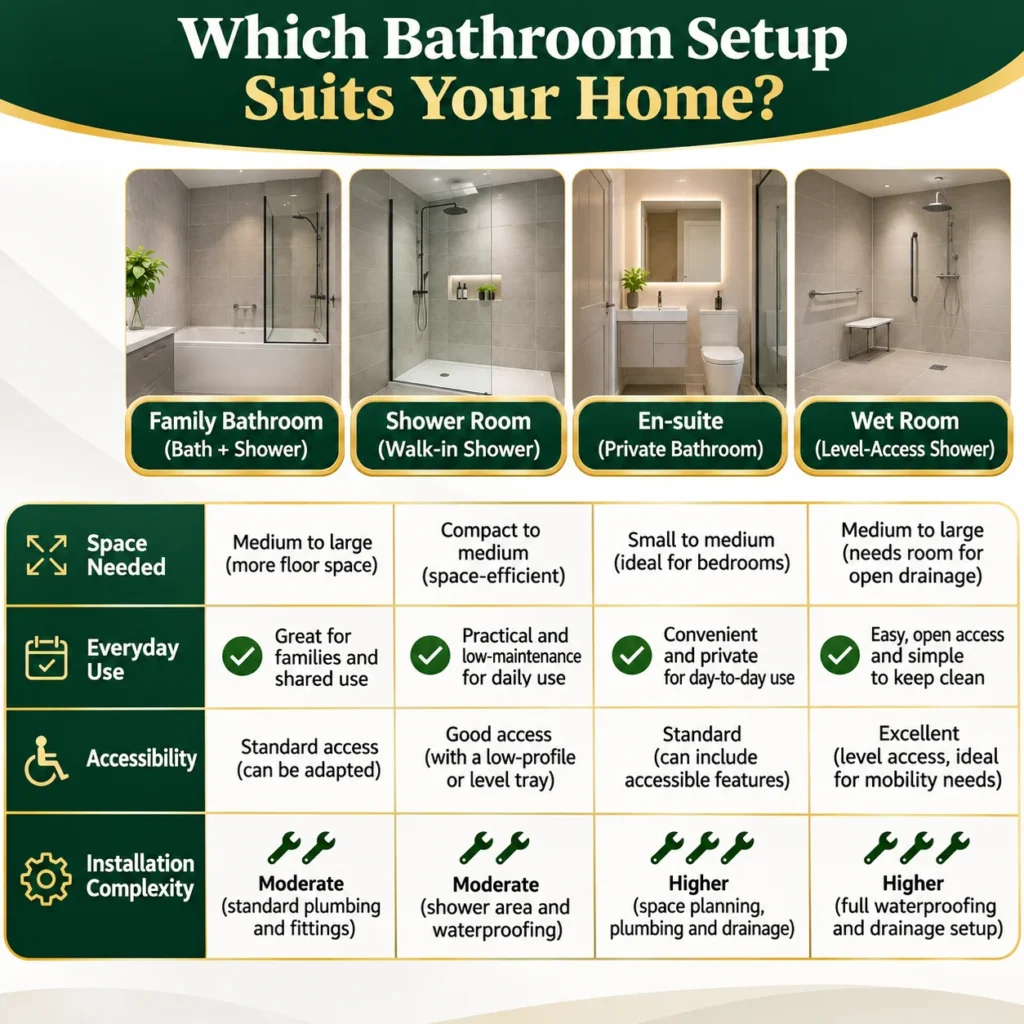
1. Should You Choose a Bath, Shower or Both?
The best bathroom design is the one that suits your life. Before choosing tiles, taps or shower screens, think about how you use your bathroom every day.
When is a new bath the better choice?
A bath is useful for families with young children and anyone who enjoys a relaxing soak. A standard straight bath can also double as a shower when fitted with a suitable screen, making it a practical option for smaller homes.
However, a bath takes up more floor space and can be difficult to enter for people with limited mobility. If you rarely take baths, using that space for a larger shower or extra storage may make more sense.
When should you choose a walk-in shower?
A walk-in shower can create a modern, open appearance and make daily washing quicker. It works particularly well in compact bathrooms where a large bath leaves little room to move.
Choose a suitable shower tray, enclosure and waterproofing system for your room. A low-threshold shower may improve access, but the design must account for drainage, floor levels and water escaping into the rest of the bathroom.
Is having both worth the extra cost?
If your bathroom has enough space, installing a separate bath and shower offers greater flexibility. Children can use the bath while adults enjoy a separate shower, and you will have more options for different needs.
The drawback is the extra cost of fixtures, plumbing and installation. In a small Fulham flat, a bath with an over-bath shower may offer better value than squeezing two separate bathing areas into one room.
Bath vs shower vs both
A quick guide to choosing the right arrangement.
Option | Best suited to | Main consideration |
Bath | Families and relaxation | Needs more floor space |
Walk-in shower | Quick washing and accessible layouts | Drainage and waterproofing |
Both | Busy family households | Higher installation cost |
Bath with shower | Smaller bathrooms | Safe access and splash protection |
2. Planning Your Bathroom Installation in Fulham
A successful bathroom installation Fulham project starts with careful measurements and a clear plan. Even an attractive design can become frustrating if the door hits the vanity unit or there is no comfortable space to dry yourself after showering.
Measure the room before buying anything
Measure the length, width and ceiling height. Mark the position of the door, windows, toilet soil pipe, water pipes and existing waste outlets.
Then decide where the bath or shower, toilet and basin will go. Keeping fixtures near their existing plumbing connections can reduce labour and disruption, although the best layout depends on the condition of your current system.
Make a small bathroom feel bigger
In a compact bathroom, choose a clear-glass shower screen, wall-mounted storage and a vanity unit that leaves enough room to move. Large mirrors and lighter wall colours can also make the space feel brighter.
Avoid choosing fixtures based on appearance alone. Check the actual dimensions, including how far cabinet doors, shower doors and drawers open.
Choose materials for everyday use
Bathroom materials must handle moisture, temperature changes and frequent cleaning. Porcelain tiles are a popular choice for floors, while suitable wall panels can reduce the number of grout joints that need cleaning.
Pay attention to slip resistance on the floor, particularly if children or older adults use the room. Ask your installer how the shower area will be waterproofed beneath its visible finish; tiles and grout alone should not be treated as a complete waterproofing system.
3. How Much Does a Bathroom Installation Cost?
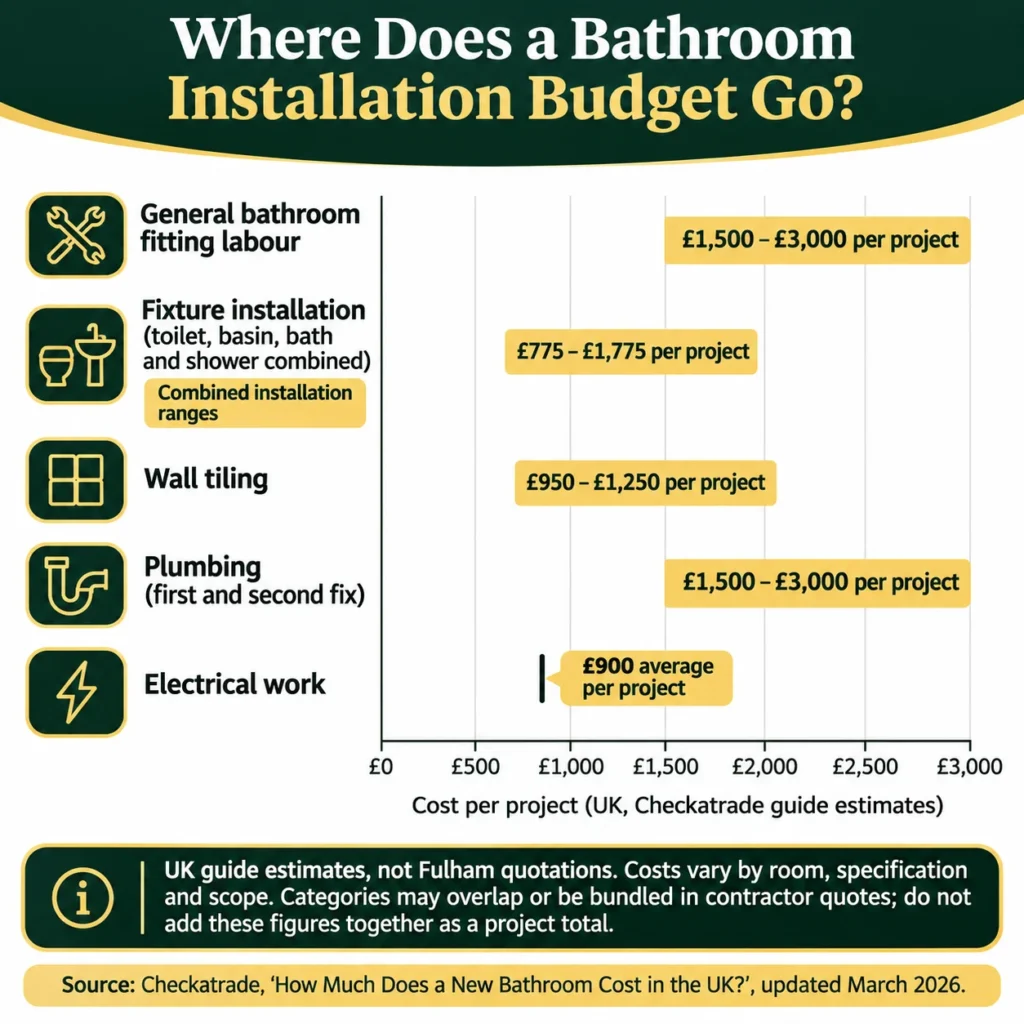
Your budget will depend on the size of the room, the fixtures you select and how much existing plumbing needs to change. According to Checkatrade’s 2026 cost guides, a standard shower installation averages around £500, while a full new bathroom commonly costs approximately £5,500–£8,000, including materials. These are UK-wide guide prices, not a confirmed quote for Fulham.
A bath-to-shower conversion may cost less than replacing the entire bathroom, especially if the existing layout is suitable. However, damaged flooring, hidden leaks, new pipework or extensive tiling can increase the final bill.
Before agreeing to work, request an itemised quote covering removal, plumbing, fixtures, tiling, waterproofing, electrical work, waste disposal and finishing. Confirm whether materials and VAT are included, and keep a contingency fund for unexpected repairs.
4. Plumbing, Ventilation and Bathroom Safety
The parts you cannot see are just as important as your new bath or shower. Poor drainage, leaks and inadequate ventilation can damage finishes and lead to expensive repairs.
Check water pressure and drainage
Before choosing a shower, ask a qualified plumber to check your water pressure and hot-water system. Some showers need a stronger supply than others, and the wrong choice can result in weak water flow or an inconsistent temperature.
Make sure wastewater can drain away properly, especially if you are planning a walk-in shower. Moving a waste outlet or changing floor levels may require additional work.
Follow the right safety requirements
In England, Approved Document G covers sanitation, hot-water safety and water efficiency. Approved Document F addresses ventilation, while Part P covers electrical safety in homes. Your installer should understand which requirements apply to your specific project.
Use a suitably qualified electrician for bathroom electrical work, including lighting, extractor fans and electric showers. Electrical equipment must be appropriate for its location and installed in line with applicable requirements.
Good ventilation is also essential. An effective extractor fan, correctly installed and vented, helps remove moisture and reduce condensation, mould and damage to paint or sealant.
5. How to Make Your New Bathroom Last
A new bathroom should be easy to maintain as well as attractive. A few simple habits can protect your investment and reduce the need for repairs.
Wipe down shower screens after use to reduce limescale, and clean grout and sealant regularly with products suitable for their materials. Check around the bath, shower tray and basin for cracked sealant, loose fittings or signs of water escaping.
Do not ignore persistent damp smells, slow drainage or discoloured patches on walls. These may indicate a leak or ventilation problem that needs attention.
When comparing bathroom installation specialists London, look for clear quotations, relevant experience, suitable insurance and a written explanation of the work. Ask who will manage plumbing, electrics and finishing, and agree on the expected timeline before work begins.
What Would Work Best in Your Bathroom?
Would a relaxing bath, a practical walk-in shower or a combination of both make your Fulham bathroom more useful? Think about your available space, budget and daily routine, then discuss your preferred layout with a professional team like CG Bathrooms Limited to plan a bathroom that suits your home.
Frequently Asked Questions
1. Is a bath or shower better for a small bathroom?
The cost depends on your bathroom size, chosen fittings, labour and whether plumbing needs to move. Get an itemised quote and keep a contingency fund for unexpected repairs.
2. How much does bathroom installation cost in Fulham?
A straightforward renovation may take around one to two weeks, while more complex projects can take longer. Structural repairs, custom fittings, delayed materials and plumbing changes can extend the schedule.
3. Can I replace my bath with a walk-in shower?
Yes, you can often improve a small bathroom by changing the fittings, storage and layout while keeping existing plumbing positions. This may reduce labour costs, although the condition of the existing pipes must also be considered.
4. Is it cheaper to install a shower over a bath?
Light-coloured porcelain or ceramic tiles can help a small bathroom feel brighter and more open. For floors, choose a finish suitable for wet areas and check its slip-resistance information.
5. How long does a bathroom installation take?
Replacing bathroom fittings alone does not generally require approval, but some electrical and drainage work may. Check the requirements for your specific project before work begins.
6. Can I keep my existing bathroom layout?
Yes, appropriate waterproofing is important in areas exposed to regular water. The installer should follow the chosen system’s instructions and ensure joints, drainage and wall preparation are correctly completed.
7. Which flooring is best for a bathroom?
Use effective ventilation, remove excess moisture and repair leaks promptly. Clean the extractor fan as recommended and check sealant regularly for cracks or deterioration.
8. Do I need an extractor fan in my new bathroom?
Often, yes, provided there is enough space and the drainage and floor construction are suitable. A clear glass screen and well-planned shower area can make the room feel less crowded.
9. Can I install a bathroom myself?
It should clearly list labour, materials, installation work, waste removal, exclusions and payment stages. It should also explain how additional work and unexpected repairs will be priced.
10. How do I choose a reliable bathroom installer in London?
Compare written quotations, relevant experience, customer references and insurance details. Confirm who will manage the trades, handle changes and provide any required electrical or building compliance certificates.