

Bathroom Fitters in Chelsea: 7 Signs You Have Found the Right Team
Choosing bathroom fitters in Chelsea is about much more than finding someone who can install a toilet, shower and tiles. A bathroom renovation involves plumbing, waterproofing, ventilation, electrics, materials, finishing and careful project coordination.
The right team should make those moving parts feel organised rather than stressful. They should explain what needs doing, provide a clear quotation, understand the practical challenges of your property and leave you with a bathroom that looks good and performs properly.
1. They Have Proven Bathroom Experience
Bathroom installation is a skilled job, particularly when the project involves moving plumbing, changing the layout, installing new electrical equipment or dealing with older properties.
A good bathroom fitters Chelsea team should be able to explain how they approach different types of bathrooms, from compact cloakrooms and ensuite bathrooms to complete renovations involving new layouts, walk-in showers or bespoke storage.
Experience also matters when unexpected issues appear. Removing old tiles may reveal damaged plasterboard, inadequate waterproofing or pipework that needs attention. An experienced fitter should identify these problems early and explain the available options instead of simply adding unexplained costs later.
2. Their Quotation Is Detailed and Transparent
A low price can look attractive until you discover that important work has been excluded.
Citizens Advice recommends getting written quotes and making sure they clearly explain the work, materials, costs, timescale and circumstances in which the price could change. It also distinguishes a fixed quote from an estimate, which is essentially a best guess.
When comparing bathroom fitters in Chelsea, look beyond the headline figure. A useful quotation should make it reasonably clear whether items such as removal of the existing bathroom, waste disposal, preparation, plumbing alterations, tiling, flooring, fixtures, fittings and finishing work are included.
The same principle applies to additional work. If an unforeseen problem is discovered behind a wall or beneath the floor, you should understand what has happened, what needs to change and what the additional cost will be before approving the work.
What to compare | Why it matters |
Labour | Shows what installation work is included |
Materials | Helps you understand the specification |
Plumbing/electrics | Identifies specialist work |
Removal and disposal | Prevents unexpected charges |
Timescale | Sets realistic expectations |
Additional work | Clarifies how changes will be approved |
Warranty/guarantee | Explains what happens if something goes wrong |
3. They Understand Compliance and Bathroom Safety
A bathroom is a wet environment, so good installation is not simply about appearance.
Ventilation deserves particular attention. The 2026 edition of Approved Document F provides current guidance for meeting Part F ventilation requirements in England.
Electrical work requires equally careful consideration. NICEIC explains that bathrooms are treated as special locations under BS 7671, with different zones around baths and showers and specific requirements for electrical equipment.
A professional team should therefore be comfortable discussing ventilation, electrical safety, drainage, water supply and any relevant building-control requirements rather than treating them as afterthoughts.
4. They Communicate Clearly From Start to Finish
A bathroom renovation temporarily takes an important part of your home out of action. Poor communication can turn a manageable project into a frustrating experience.
Reliable bathroom fitters in Chelsea should explain the expected sequence of work and tell you when decisions are needed. If a selected tile is delayed or an unexpected plumbing issue is discovered, you should hear about it promptly rather than finding out after the schedule has already changed.
The Federation of Master Builders recommends checking communication, agreeing a written contract, confirming the team responsible for the project and establishing how changes, snagging and unexpected costs will be handled.
For homeowners, this is one of the easiest signs to assess before work begins. Notice whether your questions receive clear answers. If communication is vague during the quotation stage, it may become even harder once the bathroom has been stripped out.
5. They Care About Materials and Workmanship
A bathroom can contain expensive taps, sanitaryware and tiles, but quality materials alone do not guarantee a quality result.
Poorly prepared walls can make tiles look uneven. Incorrect falls can affect shower drainage. Weak sealing around wet areas can allow moisture to reach places it should not. Poorly fitted doors, drawers or sanitaryware can also become irritating problems long after the installation team has left.
Good bathroom fitters in Chelsea should therefore discuss both product selection and installation quality. They should understand which materials are suitable for wet environments and how different products need to be installed.
This is especially important if you are investing in a premium bathroom. Spending more on fittings makes little sense if the installation does not match their quality.
6. They Can Show Relevant Previous Work
A portfolio can tell you more than a generic promise of quality.
When reviewing bathroom fitters in Chelsea, look for projects that demonstrate the type of finish you want. If you have a small period bathroom, for example, examples of large modern bathrooms may not tell you much about how effectively the fitter handles limited space.
Look closely at the details. Are tile lines consistent? Are corners neatly finished? Does the shower area appear properly integrated? Do cabinets, mirrors and sanitaryware look proportionate to the room?
Reviews can also provide useful evidence, but they should be considered alongside photographs, references, quotations and communication. Checkatrade‘s current London bathroom-fitter listings demonstrate how reviews and ratings are commonly used by customers when comparing local tradespeople.
7. They Stand Behind Their Work
A trustworthy bathroom installer should be willing to explain what happens after the final day of installation.
Ask what workmanship guarantee is provided, which products are covered by manufacturer warranties and how defects or snagging issues are handled. Citizens Advice recommends obtaining guarantees in writing and checking exactly what they cover.
What Should You Ask Before Hiring?
A useful final check is to ask seven straightforward questions: Who will manage my project? What exactly is included in the quotation? Who handles plumbing and electrical work? What happens if hidden problems are discovered? What is the expected timescale? What guarantees are provided? Can I see relevant completed projects?
A team that answers these questions clearly gives you much more information than a company offering only a low headline price.
Frequently Asked Questions
1. How do I choose bathroom fitters in Chelsea?
Start by checking relevant experience, recent projects, written quotations, insurance, guarantees and customer feedback. You should also make sure the contractor clearly explains what is included and how unexpected work will be handled.
2. How much does a bathroom renovation cost in Chelsea?
There is no single price because the cost depends on room size, materials, layout changes, plumbing, electrics, tiling and the level of finish. A detailed quotation based on an actual site assessment is more useful than relying on a generic online figure.
3. How long does a bathroom renovation take?
The duration depends on the size and complexity of the project. A straightforward replacement may be considerably quicker than a renovation involving layout changes, extensive tiling, new plumbing or electrical alterations
4. Do bathroom fitters need to follow Building Regulations?
Some bathroom projects involve work covered by Building Regulations, while certain replacement work may be exempt. GOV.UK advises homeowners to check whether approval is required before starting relevant building work.
5. Do I need an electrician for bathroom electrical work?
Electrical work around baths and showers requires particular attention because bathrooms are classed as special locations. NICEIC recommends using an appropriately qualified electrician who understands the applicable requirements of BS 7671.
6. Why is bathroom ventilation important?
Effective ventilation helps control moisture and supports indoor air quality. Current Approved Document F guidance sets out ventilation requirements for dwellings in England.
7. Should I get several bathroom quotations?
Yes. Comparing written, like-for-like quotations makes it easier to identify differences in scope, materials, exclusions and timescale. The FMB recommends comparing detailed written quotations rather than making a decision on price alone.
8. What should a bathroom quotation include?
It should clearly describe the work, materials, costs, expected timescale and how changes or additional work will be handled. Citizens Advice recommends obtaining written quotations with sufficient detail to prevent misunderstandings.
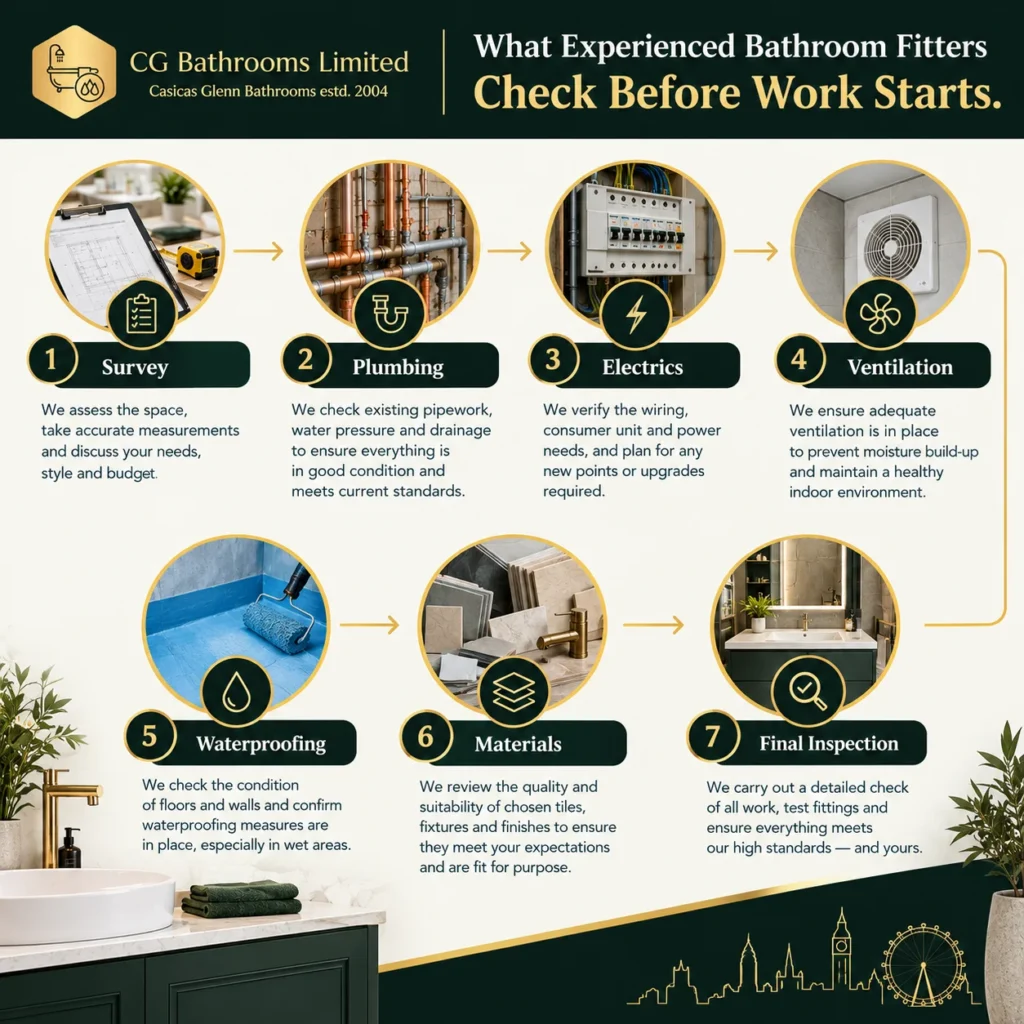
9. What should I check before bathroom work starts?
Confirm the scope, price, payment schedule, expected completion date, materials, responsibilities, insurance and guarantee arrangements. It is also sensible to clarify who will coordinate specialist plumbing or electrical work.
10. Are bathroom fitters London suitable for Chelsea properties?
Some bathroom fitters London work across multiple boroughs, but local experience can be useful because access, property layouts and project logistics vary. Ask whether the contractor has completed projects similar to yours and understands the practical requirements of working in Chelsea.
Lead magnet suggestion: “Bathroom Renovation Pre-Start Checklist — Download Free.” Include questions covering quotation, materials, access, plumbing, electrical work, ventilation, insurance, guarantees and final inspection. Place this immediately after the FAQs as a final conversion opportunity.
Reader question: Are you planning a bathroom renovation in Chelsea, and which of these seven signs matters most to you when choosing your installation team?