
Roll-Top Bath Installation in London: The Classic Freestanding Statement
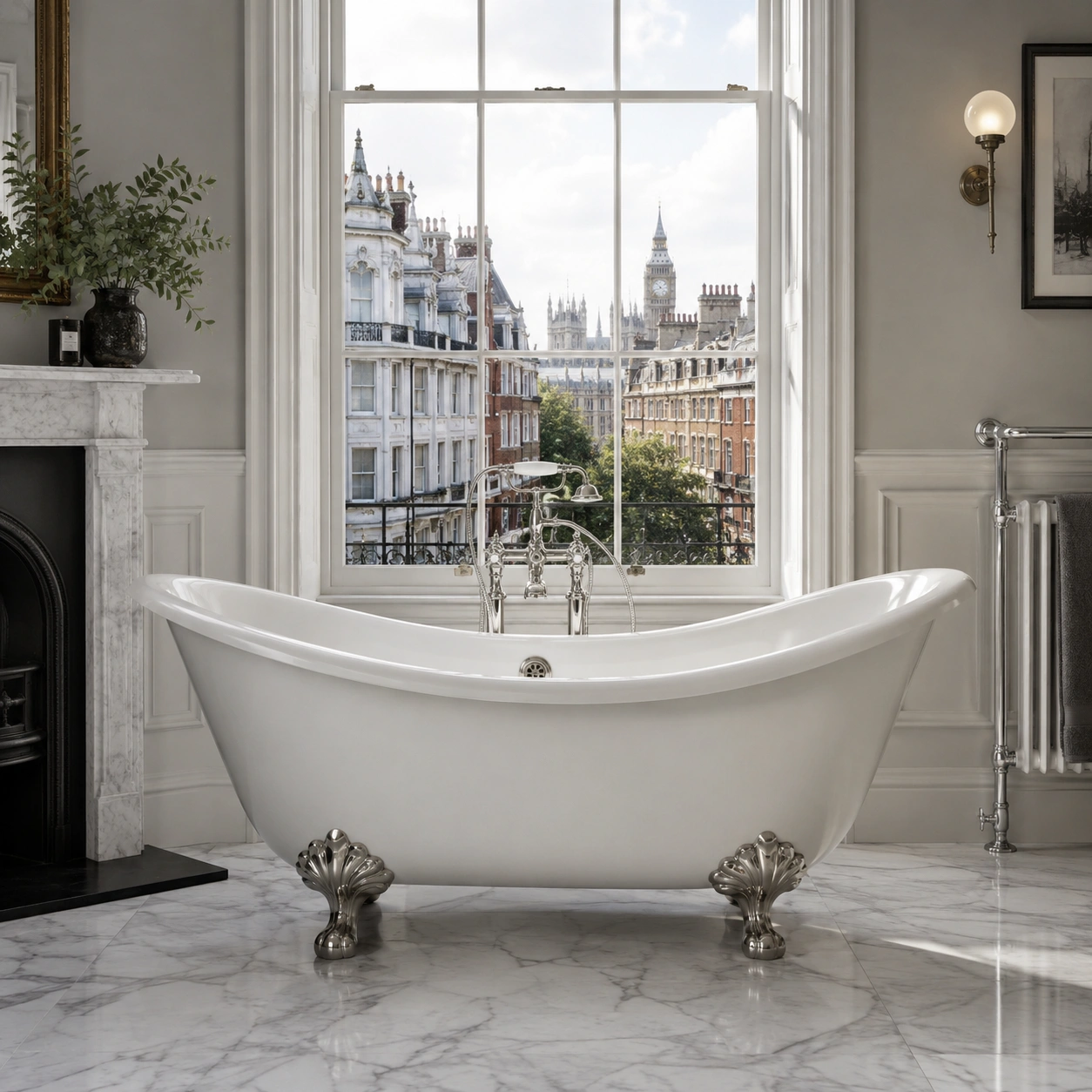
There is something timeless about a roll-top bath. Long before modern fitted bathroom suites became popular, these elegant freestanding baths were the centrepiece of luxury bathrooms across Britain. Today, homeowners are once again embracing classic design features, making roll top bath installation London projects increasingly popular among those seeking a blend of heritage charm and modern comfort.
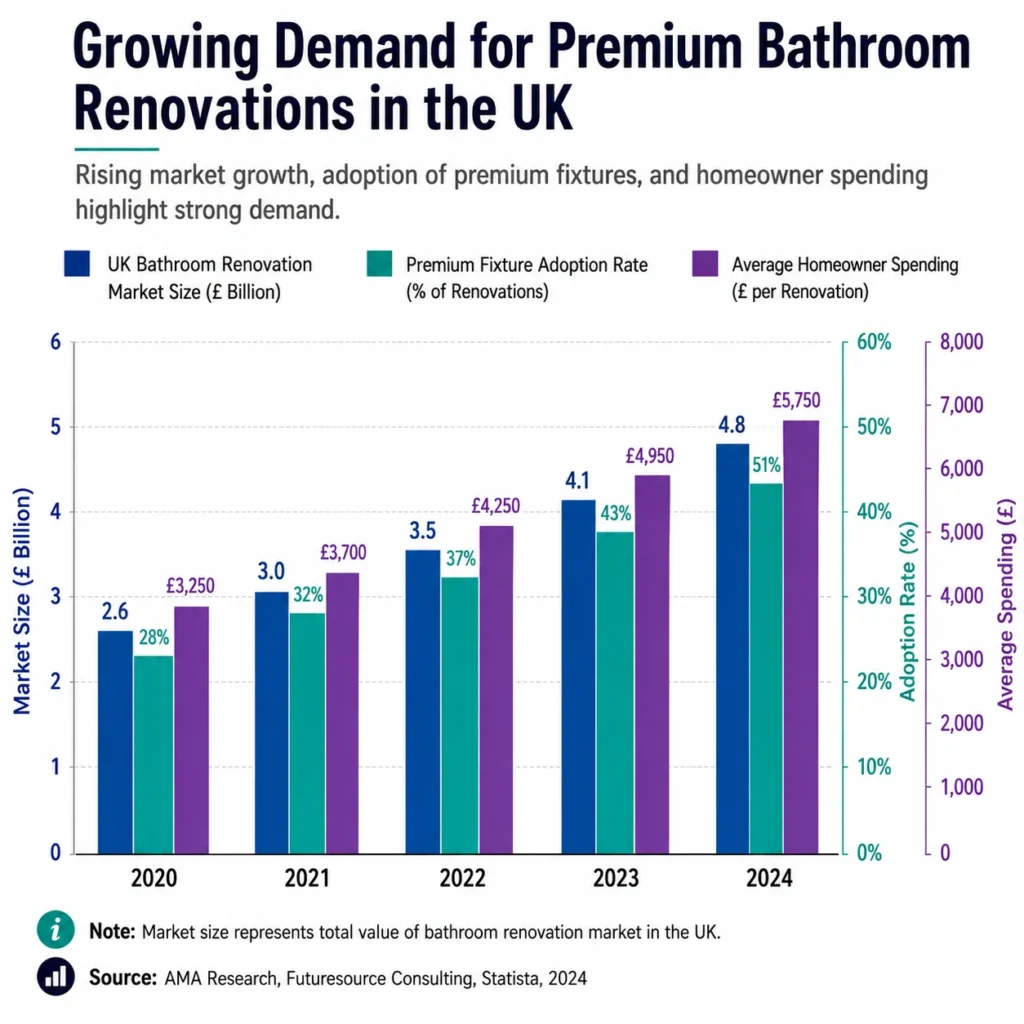
A roll-top bath is far more than a place to bathe. It creates a focal point that instantly elevates a bathroom’s appearance while providing a relaxing and spacious bathing experience. According to Statista’s UK Home Improvement Market data, bathroom renovations continue to rank among the most popular home improvement projects in the UK, with homeowners increasingly investing in premium fixtures that enhance both lifestyle and property appeal. When installed correctly, a roll-top bath can become one of the most striking features in any London home.
Why Roll-Top Baths Remain Popular in Modern London Homes
Despite changing bathroom trends, roll-top baths have maintained their appeal for generations. Their distinctive curved edges, freestanding design, and luxurious proportions create a sense of sophistication that built-in baths often struggle to replicate.
Property experts frequently note that well-executed bathroom upgrades contribute positively to overall property presentation. According to research from the UK’s HomeOwners Alliance, quality bathroom improvements remain one of the most desirable features for prospective buyers.
Unlike fitted baths that are constrained by wall layouts, roll-top baths provide greater flexibility in bathroom design and installation planning. Whether positioned centrally or near a feature wall, they naturally attract attention and create a premium feel.
Understanding Roll-Top Bath Installation Requirements
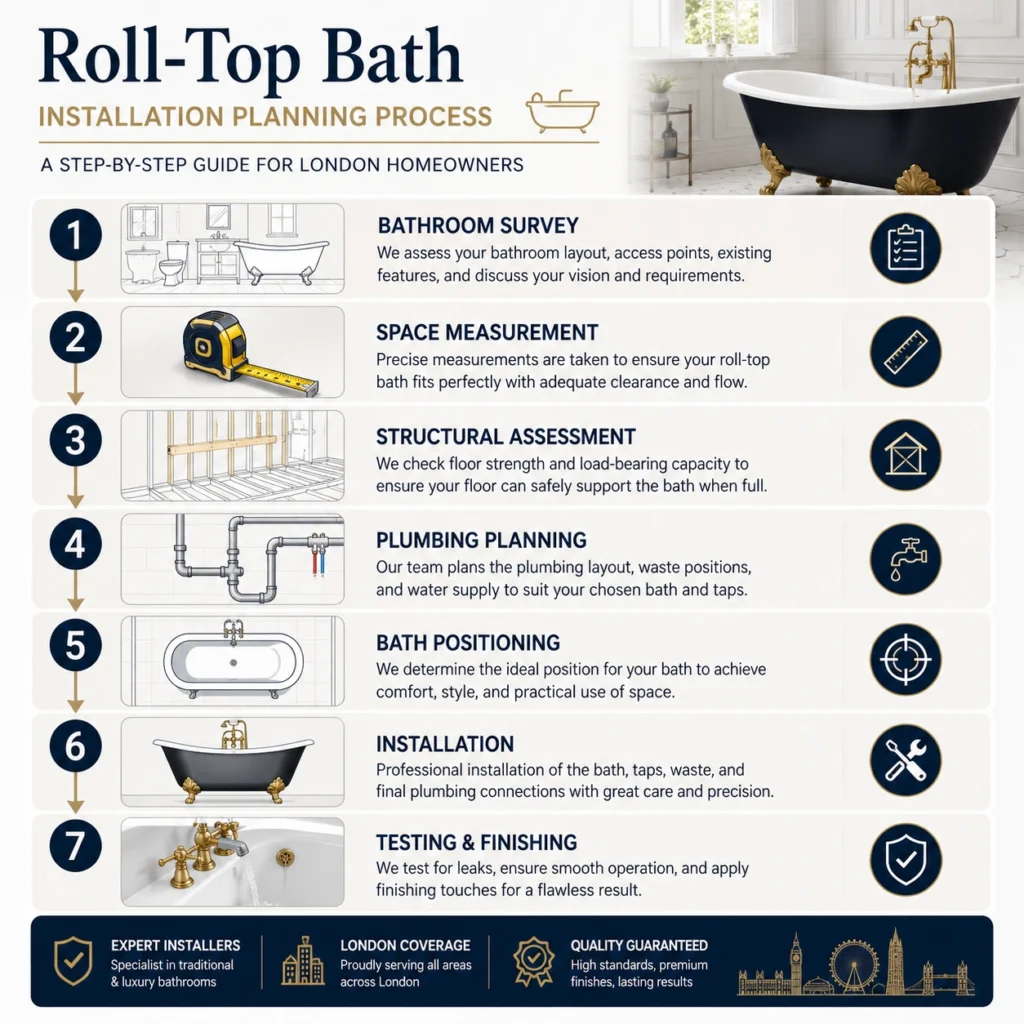
Before proceeding with a roll-top bath installation, several practical considerations must be addressed. Unlike standard built-in baths, freestanding models require careful planning to ensure both functionality and longevity.
Bathroom Space Assessment
One of the first considerations is available floor space. Roll-top baths typically require more clearance than standard fitted baths. Adequate space around the bath improves accessibility, cleaning, and visual impact.
In many London properties, particularly Victorian and Edwardian homes, bathroom layouts can accommodate freestanding baths surprisingly well due to their original room proportions.
Floor Strength and Structural Support
Traditional cast iron roll-top baths can weigh significantly more than acrylic alternatives. Once filled with water and occupied, the combined load can become substantial.
According to guidance published by the UK Government’s Building Regulations Approved Document A, structural loads should always be considered when installing heavy fixtures within residential properties.
Professional assessment may be necessary, particularly in older London properties where floor structures vary considerably.
Plumbing Configuration
A roll-top bath installation often requires adjustments to existing plumbing systems. Because the bath sits away from walls, pipework arrangements differ from conventional installations.
Key considerations include water supply routes, drainage positioning, waste pipe access, and tap placement. Proper planning ensures a clean finish while maintaining long-term performance.
Choosing the Right Roll-Top Bath Material
The material selected influences durability, maintenance, installation complexity, and overall cost.
Cast Iron Roll-Top Baths
Cast iron remains one of the most traditional options available. These baths offer exceptional durability and excellent heat retention.
Many period property owners favour cast iron because it complements the architectural character of older London homes. However, their weight often necessitates additional structural assessment.
Acrylic Roll-Top Baths
Modern acrylic alternatives provide a lighter and often more affordable solution.
They are easier to transport, simpler to install, and suitable for a wider range of floor structures. Advances in manufacturing have significantly improved their durability and appearance over recent years.
Composite and Stone Resin Baths
Premium composite materials combine visual appeal with excellent thermal properties. These baths often provide a contemporary interpretation of traditional roll-top styling while offering superior heat retention and durability.
Roll-Top Bath Installation Costs in London
The cost of a roll-top bath installation varies depending on several factors, including bath material, plumbing complexity, property access, and structural requirements.
Comparison Table: Typical Installation Factors
| Installation Element | Impact on Cost | Complexity Level |
| Acrylic Bath Installation | Lower | Moderate |
| Cast Iron Bath Installation | Higher | High |
| Plumbing Alterations | Moderate to High | High |
| Floor Reinforcement | Variable | High |
| Freestanding Tap Installation | Moderate | Moderate |
| Drainage Relocation | Moderate to High | High |
Rather than focusing solely on initial installation costs, homeowners should evaluate long-term value, durability, and maintenance considerations.
Roll-Top Bath Installation Cost Estimator
Get an instant cost estimate and project timeline tailored to your London property.
Your Estimated Installation Summary
Structural Considerations:
Common Challenges During Bathroom Installation London Projects
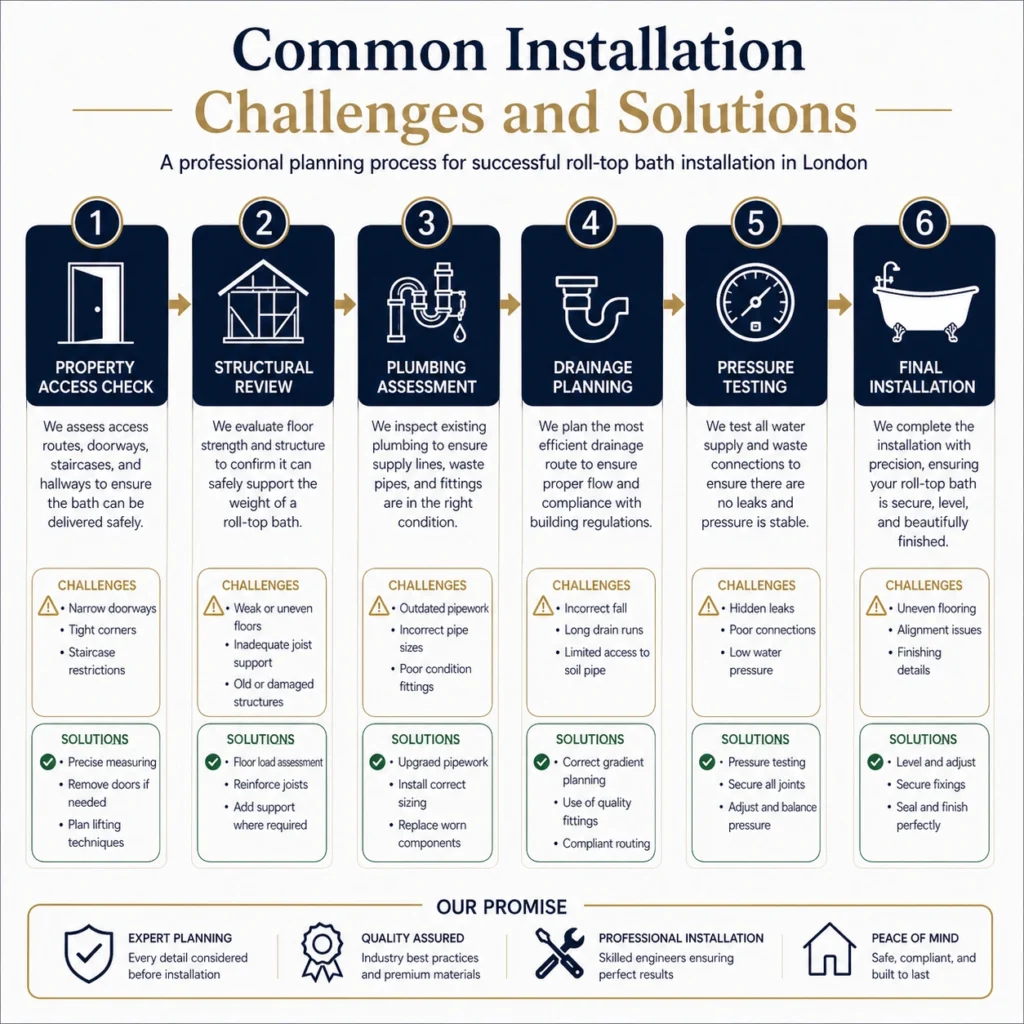
Many homeowners underestimate the complexity involved in freestanding bath installations. While the final result appears effortless, careful preparation is essential.
Access Constraints
London properties often present unique logistical challenges. Narrow hallways, staircases, and restricted access points can complicate delivery and positioning.
This is particularly relevant for cast iron baths, which may require specialist handling during transportation and installation.
Drainage Alignment
Unlike wall-mounted bath systems, freestanding baths depend on accurately positioned waste connections.
Even small alignment issues can create drainage inefficiencies or require costly adjustments later.
Water Pressure Considerations
Freestanding bath fillers often deliver higher water volumes than conventional taps. Ensuring sufficient water pressure helps maintain satisfactory filling times and overall user experience.
How Roll-Top Baths Enhance Bathroom Value
A bathroom serves both practical and lifestyle functions. Premium features often influence how homeowners and prospective buyers perceive a property.
According to consumer insights from Houzz UK renovation surveys, luxury bathroom features continue to rank highly among homeowners undertaking refurbishment projects. Freestanding baths consistently appear among the most desired bathroom additions.
While property value increases vary considerably based on location and overall property condition, quality bathroom upgrades generally contribute positively to market appeal.
Bathroom Installation London: Integrating Modern Functionality with Classic Style
One reason roll-top baths remain relevant is their ability to combine traditional aesthetics with contemporary performance.
Modern installations often incorporate:
- Efficient plumbing systems
- Thermostatic controls
- High-performance waste systems
- Improved water-saving technologies
- Enhanced insulation materials
This allows homeowners to enjoy classic styling without sacrificing modern convenience.
Maintenance Considerations After Installation
Proper maintenance helps preserve both appearance and functionality.
Freestanding baths benefit from regular cleaning around all accessible surfaces. Because the bath is not enclosed by panels, homeowners can inspect plumbing connections more easily than with many fitted alternatives.
Cast iron baths may occasionally require attention to exterior finishes, while acrylic models benefit from non-abrasive cleaning products to maintain surface quality.
Regular checks of waste fittings, seals, and tap connections can help identify minor issues before they become significant repairs.
Why Professional Installation Matters
The visual simplicity of a roll-top bath can disguise the technical expertise required for successful installation.
Professional installation ensures correct drainage gradients, secure plumbing connections, appropriate structural considerations, and compliance with relevant building standards.
According to guidance from the Chartered Institute of Plumbing and Heating Engineering (CIPHE), professionally installed plumbing systems help minimise future maintenance issues while supporting water efficiency and safety standards.
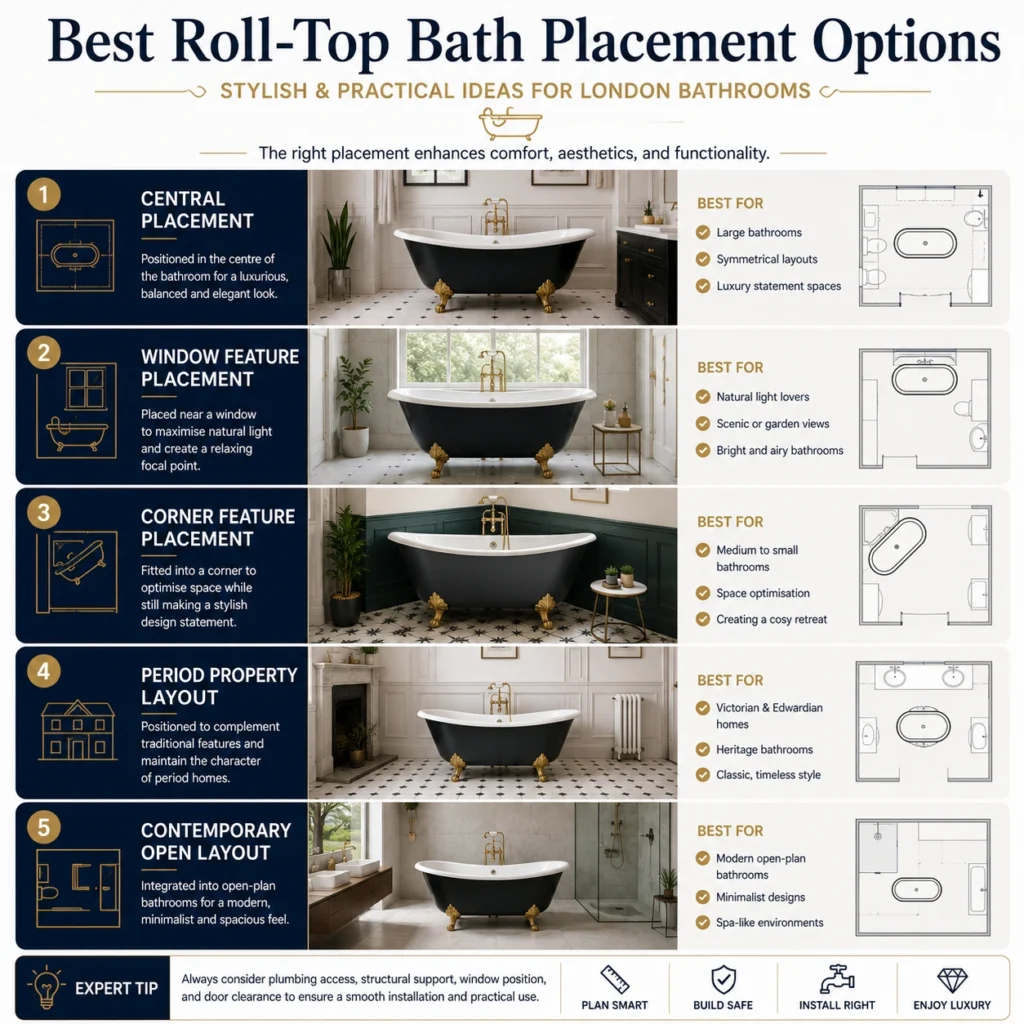
Selecting the Ideal Position for Your Roll-Top Bath
Placement significantly influences both functionality and visual impact.
A centrally positioned bath creates maximum visual appeal when space allows. In more compact bathrooms, positioning near a feature wall can maintain the freestanding aesthetic while preserving circulation space.
Proper planning should also consider access to plumbing services, maintenance requirements, natural lighting, and daily usability.
The Growing Appeal of Freestanding Baths in London Renovations
Home renovation trends continue to favour personalised spaces that balance comfort, functionality, and visual appeal. As homeowners increasingly seek distinctive bathroom features, roll-top baths remain one of the most enduring choices available.
Industry research from Houzz indicates that luxury bathing experiences continue to influence renovation priorities, particularly among homeowners undertaking full bathroom refurbishment projects. The enduring popularity of freestanding baths demonstrates how classic design elements can remain relevant even as technology and homeowner preferences evolve.
Are You Planning a Roll-Top Bath Installation in London?
Every bathroom presents unique opportunities and challenges. Whether you’re renovating a period property, upgrading a family bathroom, or creating a luxury master suite, careful planning can make all the difference. What is the biggest consideration for your project—space, plumbing, installation costs, or choosing the perfect roll-top bath style?
FAQs – Roll-Top Bath Installation London
1. How much does roll top bath installation cost in London?
The cost of roll top bath installation in London depends on the type of bath, plumbing requirements, floor reinforcement needs, and the complexity of the installation. Cast iron roll-top baths typically require more labour and structural assessment than lighter acrylic models. A professional survey can provide a more accurate estimate based on your bathroom layout.
2. Can a roll-top bath be installed in a small London bathroom?
Yes, a roll-top bath can be installed in many small London bathrooms if there is sufficient clearance around the bath for access and maintenance. Careful planning and accurate measurements are essential to ensure the bath fits comfortably without making the room feel cramped.
3. Do roll-top baths require special plumbing?
Roll-top baths often require different plumbing arrangements compared to standard fitted baths. Because they are freestanding, water supply pipes and waste connections may need to be repositioned to achieve a clean and functional installation.
4. Are roll-top baths suitable for period properties in London?
Absolutely. Roll-top baths are particularly popular in Victorian, Edwardian, and Georgian homes throughout London because they complement traditional architectural features while providing modern bathing comfort.
5. What is the best material for a roll-top bath?
The best material depends on your budget, property structure, and personal preferences. Cast iron baths offer exceptional durability and heat retention, while acrylic roll-top baths are lighter, easier to install, and often more cost-effective.
6. Does a roll-top bath add value to a property?
A professionally installed roll-top bath can enhance the visual appeal of a bathroom and make a property more attractive to potential buyers. Premium bathroom features are often viewed as desirable additions during property viewings.
7. How long does roll-top bath installation take?
Most roll-top bath installation projects can be completed within one to three days, depending on plumbing alterations, floor preparation, and any additional bathroom renovation work required.
8. Do I need floor reinforcement for a cast iron roll-top bath?
In some cases, yes. Cast iron roll-top baths are significantly heavier than acrylic alternatives, especially when filled with water. A professional assessment can determine whether the existing floor structure requires reinforcement.
9. What taps work best with a roll-top bath?
Freestanding bath fillers, floor-mounted taps, and traditional pillar taps are all popular choices for roll-top baths. The best option depends on the bathroom layout, plumbing configuration, and the style you wish to achieve.
10. Why should I choose a professional bathroom installation company in London for a roll-top bath?
Professional bathroom installation in London helps ensure correct plumbing connections, secure drainage, proper structural considerations, and compliance with relevant building standards. Expert installation also helps minimise the risk of leaks and future maintenance issues.